More than 175 high school students from 14 Georgia counties competed in the 15th annual AGC East Georgia Skills Challenge on November 19, 2026, a two-hour hands-on contest at the Georgia Carolina State Fairgrounds that doubles as a recruiting pipeline for the state's construction industry. The event, run through a partnership between AGC Georgia and SkillsUSA Georgia, offers students two distinct payoffs: face time with dozens of employers, and a competitive route that can carry winners to state and national SkillsUSA contests.
East Georgia Skills Challenge: A Gateway to Construction Careers
The Augusta competition ran from 10 a.m. to noon on Thursday, November 19, testing students from schools including Evans High School, Thomson High School, Hephzibah High School, Jefferson County High School, Washington County High School and others drawn from across the region. It is one of a series of regional challenges AGC Georgia stages each fall, with 2026 challenges scheduled between October 21 and November 19 across the state.
SkillsUSA Georgia, which co-runs the series, describes the challenges as free to attend thanks to industry partners and estimates that last year more than 2,300 students from 108 schools took part statewide. The program's stated purpose is straightforward: expose students to construction careers and give them the chance to network with local and future employers.
Event reporting put the Augusta turnout slightly above 180 students, including roughly 30 female competitors — a figure Zach Fields, CEO of AGC Georgia, highlighted as evidence of growing interest in construction careers among young people.
Addressing the Labor Shortage: The 'Generation Toolbelt' Initiative
Construction companies say the competition arrives as the industry continues to grapple with a shortage of skilled workers. Scott Clark, CEO of R.W. Allen Construction, said events like this help companies connect with students and educators while raising awareness about the career opportunities available in construction.
Organizers frame the effort as part of a broader trend they call "Generation Toolbelt" — a wave of young people seeking hands-on learning experiences and, increasingly, careers in the trades. AGC Georgia's announcement of the 2026 series noted that the 2025 challenges drew more than 2,300 student competitors and observers from 108 schools, along with nearly 350 industry firms. The organization credits growing awareness of earning potential in high-demand skilled trades with helping drive increased enrollment in apprenticeships and career and technical education programs.
The program is presented as a statewide workforce development effort that depends on industry professionals donating time, effort and resources — a coalition that spans construction firms, educators and, according to the program's promotion, government stakeholders.
Skills on Display: Trades Tested at the Fairgrounds
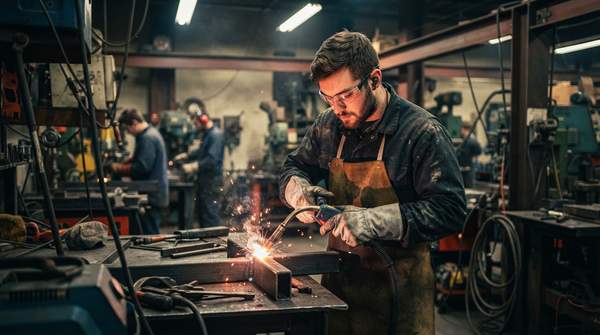
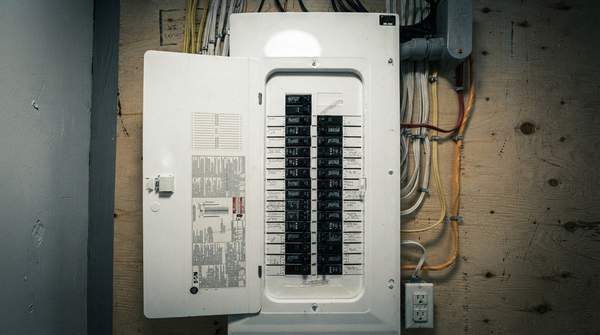
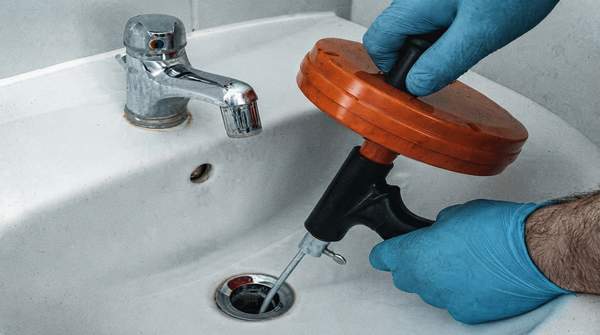
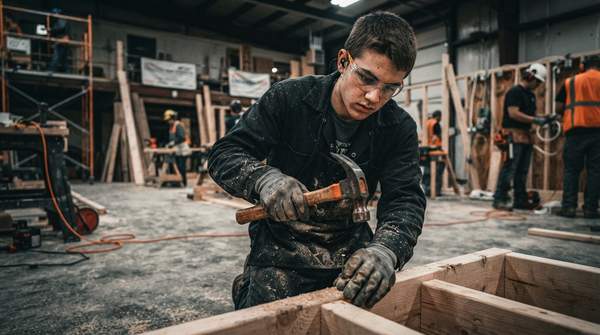
The competition is deliberately practical. Students at the Augusta event competed in disciplines including carpentry, electrical work, plumbing, welding, bricklaying and heavy equipment operation. Event coverage also listed masonry, sheet metal, blueprint reading and cabinet making among the trades tested.
The breadth matters for readers weighing a trades path: the categories mirror the occupations Georgia contractors report struggling to staff. Rather than classroom exercises, students work with the tools and materials of the job in front of the same firms that might later hire them.
Student Pathways: Career and Competition
The challenge's value to a participant can be read along two parallel tracks, and the framework below lays out how the same day of competition feeds both.
| Pathway | How it works | Outcome for the student |
|---|---|---|
| Pathway 1: Career connection | Students network with local and future employers during the event; nearly 350 industry firms participated statewide in 2025, and dozens of employers were on hand in Augusta. | Direct exposure to construction careers and potential job or apprenticeship conversations. |
| Pathway 2: Competition advancement | Winners at regional AGC challenges qualify for the regional SkillsUSA competition; regional winners advance to the state SkillsUSA contest, with national-level competition beyond that. | A structured ladder of competitive recognition, from Augusta to statewide and potentially national stages. |
The two tracks are not mutually exclusive. A student who wins a trade category gains both a credential for the next competition tier and visibility with employers who sponsor and judge the events. SkillsUSA Georgia's own program description pairs the two benefits in a single sentence: students are "exposed to various construction careers" while getting "the opportunity to network with local and future employers."
The Road Ahead: Regional, State, and National Recognition
For competitors who qualify, the next steps are already on the calendar. According to a press release for the East Georgia event, the challenge prepares qualifying students for the regional SkillsUSA competition in January. Winners from those regional events then move on to the state SkillsUSA competition, held at the Georgia World Congress Center.
AGC Georgia has announced the dates for the next state-level showcase: March 10–11, 2027, at the Georgia World Congress Center, where more than 100 students who qualified through the 2026 Skills Challenges will demonstrate their talents. From there, top state performers can advance toward national SkillsUSA competition.
Not every participant advances, and the series does not publish a comprehensive winners list from each regional event. But the pathway from a November morning at the fairgrounds to a March stage in Atlanta is formal, dated and open to any student who wins a category.
Charting a Course: Next Steps for Aspiring Tradespeople
High school students interested in construction trades should actively seek out and participate in regional skills challenges like the East Georgia event to explore career paths and competition opportunities. The measurable indicators to watch are concrete: increased student participation in regional SkillsUSA competitions and subsequent advancement to state and national events, along with reported employer connections and apprenticeship placements. With the 2027 state competition scheduled for March 10–11 at the Georgia World Congress Center, students who qualified through this year's challenges have a fixed date — and a visible next rung — on which to test how far the Augusta fairgrounds can take them.
Sources
- High School construction students compete at the Georgia Carolina State Fair — The Augusta Press
- AGC Georgia announces 2026 Skills Challenge series dates — Grice Connect
- AGC Skills Challenges — SkillsUSA Georgia
- More than 175 students compete in Augusta construction skills challenge — WRDW
- Support Skills Challenges - AGC Georgia
- High school students compete in construction skills challenge at Georgia Carolina State Fair Grounds — WFXG