In a surprising twist, a recent industry report projects AI integration will lead to a 15% increase in demand for electricians and plumbers over the next decade. The projected 15% increase in demand directly challenges widespread fears of job displacement. The projected 15% growth signals a fundamental shift: AI will transform roles, not eliminate them.
Many believe AI will automate skilled trade jobs. The reality is AI creates new demands for human expertise and augments existing roles. This gap between public perception and market reality challenges workforce development.
Companies and policymakers must invest in continuous upskilling programs and develop clear ethical guidelines. Investing in continuous upskilling programs and developing clear ethical guidelines will harness AI's potential to strengthen the skilled trades workforce, especially as ethical considerations for AI in trades become more prominent by 2026.
The Automation Anxiety: Why We Fear AI Takes Our Jobs
A 2023 Pew Research study found 70% of Americans believe AI will eliminate more jobs than it creates in the next decade. Public anxiety, fueled by media focus on AI's repetitive task automation, overlooks AI's nuanced impact on skilled trades, as The Wall Street Journal reports. Historically, industrial robots displaced manufacturing jobs, according to MIT Technology Review. This persistent gap between worker anxiety and market demand for AI-enabled tradespeople suggests a critical failure in industry communication and educational outreach. It leaves a vital workforce unprepared and unwilling to embrace necessary transformation.
Why Skilled Trades Are Different: The Human Element AI Can't Replicate
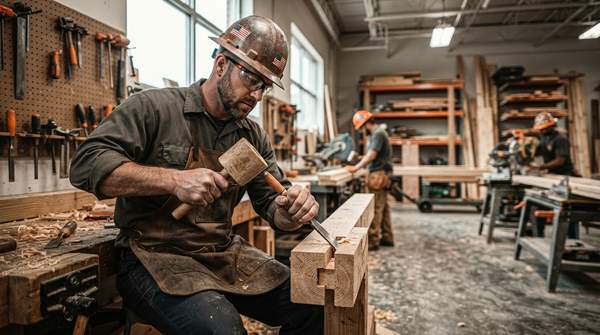
Skilled trades demand complex problem-solving, adaptability to unpredictable environments, and fine motor skills. Current AI and robotics struggle to replicate these, according to Boston Dynamics. Human judgment and creativity are critical for diagnosing unique issues in plumbing, electrical work, or carpentry, which AI lacks, states the National Association of Home Builders. On-site collaboration, client communication, and ethical decision-making are inherent to skilled trades, requiring human social intelligence, a point reinforced by The Tennessean. Skilled trades require a blend of human judgment, adaptability, and social intelligence that AI cannot yet replicate. Direct displacement is unlikely.