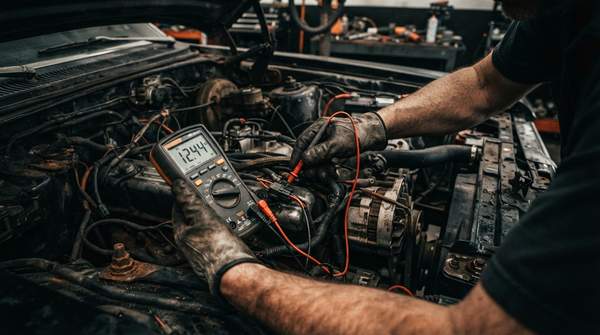
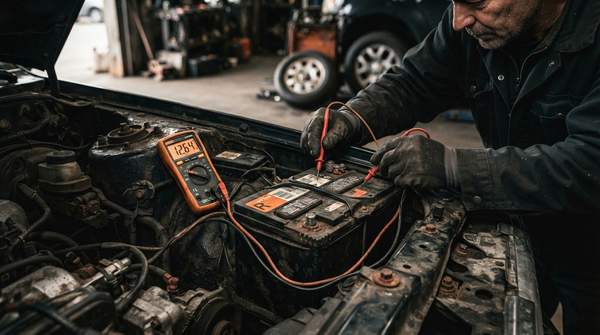
Despite sleek exteriors, every electric vehicle's (EV) safety and longevity fundamentally hinge on a complex, unseen dance between two critical systems that prevent catastrophic battery failures. These sophisticated automotive electrical components are essential for robust diagnostics and safety in 2026 vehicles. They manage the high-voltage battery, ensuring optimal performance and preventing thermal events.
EVs promise a cleaner, simpler driving experience. However, their underlying battery technology demands continuous, complex digital and thermal oversight to remain safe and performant. Lithium-ion batteries, while powerful, operate within narrow parameters requiring constant active management.
As EV adoption accelerates, the sophistication and reliability of Battery Thermal Management Systems (BTMS) and Battery Management Systems (BMS) will differentiate safety and long-term owner satisfaction. Manufacturers must invest heavily in these 'invisible' technologies.
The Silent Guardians of Your EV Battery
Battery Thermal Management Systems (BTMS) and Battery Management Systems (BMS) are critical for EV safety. BTMS regulates temperature, while BMS monitors real-time parameters to prevent overcharging and thermal runaway, according to pmc. These integrated systems defend against high-energy EV battery volatility, ensuring operational safety and longevity. A BMS continuously monitors voltage, current, and temperature across individual cells and the entire pack. It balances cell charges, estimates state of charge (SoC) and state of health (SoH), and isolates the pack if unsafe conditions arise. The BTMS actively cools or heats the battery, maintaining its optimal operating temperature. This constant digital and thermal management prevents catastrophic failure and premature degradation, making EV batteries high-maintenance components, not 'set and forget' power sources.
Understanding Battery Degradation and Environmental Stress
Lithium-ion batteries degrade over their lifespan, losing capacity and impacting vehicle range and performance, according to aware-series. This natural aging diminishes a battery's charge capacity over time. Extreme temperatures, hot or cold, also negatively impact battery health and performance, as noted by aware-series. Operating outside an ideal temperature window accelerates internal chemical reactions, causing irreversible damage. Continuous monitoring and thermal regulation are non-negotiable for maintaining EV performance and preventing premature failure. Even advanced management systems cannot fully overcome these fundamental chemical limitations. The perceived simplicity of electric vehicles is an illusion; their core power source demands an increasingly complex, always-on digital and thermal battle to prevent catastrophic failure and premature degradation.

The Future is Predictive: AI in Battery Health
Data-driven Prognostics and Health Management (PHM) with machine learning (ML) can analyze sensor datasets to predict battery failures and identify safety hazards, according to pmc. This shifts battery management from reactive problem-solving to proactive prediction. Integrating AI and ML significantly boosts safety and extends battery life by anticipating issues before they become critical. Machine learning-driven PHM turns battery management into a high-stakes data science problem, continuously analyzing data streams to forecast potential degradation or faults. Manufacturers failing to invest aggressively in ML-driven PHM risk not just individual battery failures, but a systemic erosion of trust in EV longevity and safety.
Your Driving Habits Matter: Maximizing Battery Life
Frequent deep discharges accelerate battery degradation compared to shallower discharges, according to aware-series. Regularly depleting the battery to very low levels shortens its lifespan. While sophisticated systems protect the battery, owner awareness of charging habits significantly complements these technologies, directly influencing long-term battery health and vehicle value. 'Smart' systems alone cannot fully insulate batteries from real-world stresses. Understanding how charging patterns interact with battery chemistry empowers owners to maximize longevity. For optimal health, keep your EV battery charged between 20% and 80% for daily use.
Common Questions About EV Battery Care
What are the primary electrical components beyond the battery in an EV?
Beyond the high-voltage battery, key EV electrical components include the inverter, which converts DC battery power to AC for the electric motor. A DC-DC converter steps down the high voltage to power the traditional 12V accessories, while the onboard charger converts AC from the grid into DC for battery storage.
What is thermal runaway in an EV battery and how is it prevented?
Thermal runaway is a dangerous self-sustaining exothermic reaction where rising temperature causes further temperature increases within a battery cell. Battery Thermal Management Systems (BTMS) prevent this by actively cooling or heating battery cells to maintain an ideal operating range, typically between 20 0C and 35 0C, as detailed by the NHTSA Battery Safety Initiative.
How often should an EV battery's health be checked?
While modern Battery Management Systems (BMS) continuously monitor health, a comprehensive diagnostic check by a certified technician is recommended every 1-2 years or 30,000 miles. This check assesses individual cell balance and overall capacity degradation using specialized tools, providing insights beyond basic dashboard indicators.
By 2026, manufacturers like Tesla and GM will likely find that continued aggressive investment in machine learning-driven Prognostics and Health Management is critical to maintaining consumer trust and ensuring the long-term viability of their EV offerings.