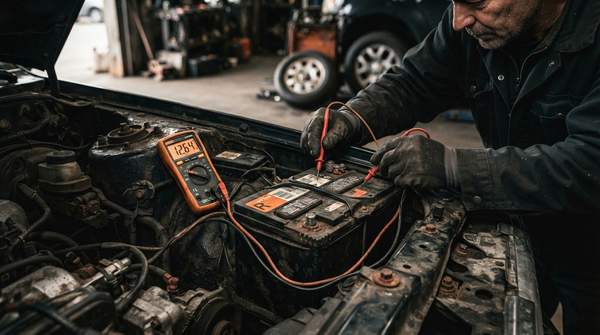
The sudden appearance of a 'Check Engine' light once signaled immediate anxiety and a lengthy, mysterious diagnostic process. Today, however, modern automotive diagnostic tools provide technicians and enthusiasts a direct line of communication to the vehicle's computer, transforming troubleshooting from guesswork into data-driven science. These scanners are essential for efficiently and accurately diagnosing issues within a vehicle's internal network, allowing faster, more precise repairs.
What Are Modern Automotive Diagnostic Tools?
Modern automotive diagnostic tools are electronic scanners that plug into a vehicle's On-Board Diagnostics (OBD) port, typically an OBD2 socket, to read and clear trouble codes and view live data from various sensors. The OBD system is a standardized protocol for self-diagnostics and reporting that is present in most vehicles sold in the United States since 1996. This standardization means that a single tool can communicate with a wide range of makes and models, using consistent communication protocols and code designations.
These tools range from simple code readers to sophisticated scan tools. According to information from Auto Body Toolmart, basic code readers can retrieve and clear Diagnostic Trouble Codes (DTCs) from the engine control unit. More advanced scanners, however, can access a vast spectrum of information, including live data streams from sensors, pending "soft" codes that have not yet triggered a warning light, and data from other critical systems like the Anti-lock Braking System (ABS), airbags, and transmission.
How Automotive Diagnostic Tools Work: A Step-by-Step Guide
Leveraging a diagnostic scan tool's full potential requires understanding its proper use. The process is systematic, moving from physical connection to data interpretation. Follow these steps to correctly interface with a vehicle's computer system and begin the diagnostic workflow.
- Step 1: Locate the Vehicle's OBD-II Port
First, you must find the data link connector (DLC), more commonly known as the OBD-II port. According to Launch Tech USA, this 16-pin port is typically located under the dashboard on the driver's side, often near the steering column or kick panel. In some vehicles, it may be concealed behind a small cover. The location is mandated to be within reach of the driver's seat, so a quick visual inspection of this area should reveal its position.
- Step 2: Connect the Scan Tool and Power It On
With the vehicle's ignition off, firmly plug the scan tool's connector into the OBD-II port. The connector is keyed, so it will only fit one way. Once connected, turn the vehicle’s ignition to the "On" or "Accessory" position without starting the engine. The scan tool will draw power directly from the vehicle's battery via the OBD-II port and will automatically power on and begin its boot-up sequence.
- Step 3: Establish Communication with the ECUs
Next, the scan tool must establish a communication link with the vehicle's on-board computers, known as Electronic Control Units (ECUs) or modules. Modern vehicles have multiple ECUs managing everything from the engine and transmission to the airbags and climate control. The scan tool will perform a "handshake" procedure, automatically detecting the specific communication protocol (e.g., CAN, K-Line, J1850) used by the vehicle to ensure a stable data connection.
- Step 4: Retrieve Diagnostic Trouble Codes (DTCs)
Once communication is established, navigate the tool's menu to read the DTCs. The primary function of the tool is to retrieve this data. DTCs are standardized five-character alphanumeric codes that identify a specific problem detected by an ECU. For example, a code like "P0302" indicates a "Cylinder 2 Misfire Detected." The tool will display any "active" codes (which have triggered the check engine light) and may also show "pending" codes for issues that have been detected but are not yet persistent enough to illuminate a warning.
- Step 5: Analyze Live Data and Freeze Frame Data
Do not stop at the DTC. Navigate to the "Live Data" or "Data Stream" function on your scanner. This allows you to view real-time information from the vehicle's sensors, such as engine RPM, vehicle speed, coolant temperature, oxygen sensor voltage, and fuel trim values. Additionally, look for "Freeze Frame" data. This is a snapshot of the vehicle's operating conditions at the exact moment a DTC was stored, providing critical context for what was happening when the fault occurred.
- Step 6: Formulate a Diagnostic Strategy
The DTC and the sensor data are clues, not the final answer. Use this information to formulate a diagnostic plan. A cylinder misfire code (P0302), for example, doesn't automatically mean you need a new spark plug. By observing live data, you might notice that the fuel trim values are abnormal, suggesting a faulty fuel injector, or you might test the ignition coil for proper function. This step separates a parts-changer from a true diagnostician.
- Step 7: Clear Codes and Verify the Repair
After performing the necessary repairs, use the scan tool to clear the DTCs from the ECU's memory. This will turn off the check engine light. The final, critical step is to verify the repair. Take the vehicle for a comprehensive test drive that mimics the conditions under which the original fault occurred. After the drive, re-scan the vehicle to ensure no codes have returned. This confirms that the root cause of the problem has been successfully addressed.