Industry

The AI Shift: How Smart Technology is Reshaping Construction and Home Services

AI and smart technology are rapidly transforming the construction and home services industries, moving from theoretical concepts to practical realities. This shift is driven by chronic labor shortages, increasing project complexity, and stringent regulations, redefining efficiency and safety.

BF
Ben Foster

April 5, 2026 · 6 min read

A futuristic construction site at dusk, showcasing AI-driven machinery, drones, and holographic interfaces, symbolizing the integration of smart technology in construction and home services.

A decade ago, a construction site manager walked the grounds with blueprints and a clipboard; today, that same manager holds a tablet displaying a dynamic 3D model, receiving real-time data from autonomous excavators and AI-driven scheduling software. This shift highlights how AI and smart tech in construction and home services have become a practical necessity. The global construction industry faces a pivotal moment, driven by chronic labor shortages, intensifying project complexity, and stringent emissions regulations. This transition, forecast to accelerate between 2026 and 2035, is redefining efficiency, safety protocols, and the nature of skilled labor.

What Changed: The Catalyst for Digital Transformation

While construction and home services historically lagged in digital tool adoption, a triad of persistent challenges—notably chronic labor shortages, increasing project complexity, and stringent emissions regulations—has broken the inertia of old models. These pressures have reached a critical inflection point, making adherence to new operational models paramount for survival and growth.

First, chronic skilled labor shortages are a global problem: experienced tradespeople retire, but fewer new workers enter the field, creating significant capacity gaps. Second, project complexity has increased dramatically. Modern buildings demand sophisticated systems integration, adherence to complex sustainability standards like those found in sustainable building materials, and intricate supply chains. For example, Vocal.media reports that modern retrofit projects in Japan now bundle structural upgrades with smart monitoring and energy efficiency improvements, transforming single-scope jobs into multifaceted urban renewal programs, which traditional analog methods struggle to manage.
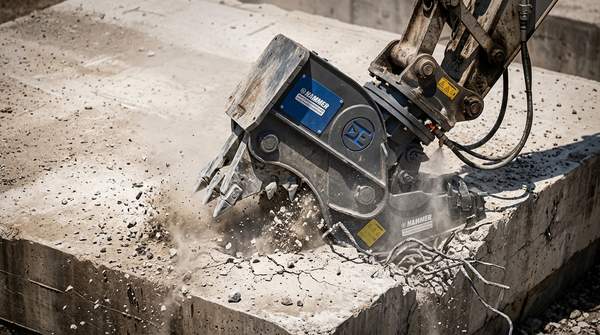
Finally, regulatory pressures, particularly concerning emissions and safety, are compelling firms to adopt more precise and data-driven practices. Smart equipment with telematics can monitor fuel consumption and operational efficiency, helping companies meet environmental targets. A forecast from IndexBox.io notes that these factors underpin a projected robust expansion of the smart construction equipment market from 2026 to 2035, anchoring the industry's digital transformation.

Key AI Integration Trends in Construction: A Comparative Analysis

AI and smart technology are integrating across all project phases, from planning to maintenance, creating measurable impacts on productivity and operational control. This shift from manual to automated, data-rich systems is driven by the rising adoption of Building Information Modeling (BIM) and data analytics, which facilitate superior planning, visualization, and coordination among stakeholders.

On job sites, advanced digital tools are already deployed by leading Japanese contractors. Obayashi Corporation uses battery-powered backhoes, and Kajima employs a multi-machine autonomous control system. These technologies address labor shortages and enhance precision, with Japan's Federation of Construction Contractors confirming up to a 30% boost in site productivity, as reported by Vocal.media. This marks a significant leap from historically marginal gains. Furthermore, MAX Co. will deploy an AI-enabled Autonomous Mobile Tying Robot in February 2026 to automate repetitive, labor-intensive tasks.

In the home services sector, AI is enabling 24/7 customer interaction, moving beyond traditional business hours. For instance, Local Marketing Plus SEO offers an AI Voice Assistant for plumbing companies, handling appointment scheduling and initial inquiries around the clock, as reported by DNJ.com. This frees human staff to focus on complex customer issues and on-site work.

MetricTraditional ApproachSmart Technology Approach
Site ProductivityBaseline performance, reliant on labor availability.Up to 30% increase reported by Japan's Federation of Construction Contractors.
Project Planning2D blueprints, manual coordination, high risk of clashes.Building Information Modeling (BIM) for 3D visualization and clash detection.
Equipment ManagementReactive maintenance based on failures or fixed schedules.Predictive maintenance alerts, uptime guarantees, and optimized fuel efficiency.
Customer Intake (Home Services)Human receptionists limited to standard business hours.24/7 AI-powered voice assistants for booking and initial queries.
Safety and ComplianceManual inspections and periodic safety meetings.AI-powered site monitoring for hazard detection and real-time safety alerts.

Winners and Losers: The Bifurcating Market and Workforce

The widespread adoption of AI and smart technology is not a universally uplifting tide; it is creating a clear division between those prepared for the shift and those who are not. The primary beneficiaries are large, well-capitalized contractors who can make the significant upfront investments in autonomous equipment and integrated software platforms. These firms leverage technology to bid more competitively on complex projects, improve profit margins through efficiency, and mitigate risks associated with labor availability.

Technology providers are also clear winners. Companies developing specialized AI for the trades, such as ServiceTitan, which reports surging AI adoption among commercial contractors, are capitalizing on the industry's need for digital solutions. The smart construction equipment market itself is bifurcating, according to IndexBox.io. A high-value segment is emerging, centered on fully autonomous operation and data-as-a-service (DaaS) models. In this model, the economic logic is driven by the total cost of ownership, where predictive maintenance and uptime guarantees justify premium investments. Conversely, the volume segment for basic telematics faces commoditization and tighter margins.

The workforce faces the most significant impact and the greatest barrier to technological transition: workforce readiness. A KPMG survey found 71% of industry respondents are optimistic (up from 66% in 2023), but their biggest concern is team preparation. Workers skilled in operating, managing, and maintaining new digital systems—like drone pilots, robotics technicians, and data analysts—are in high demand and command higher wages. Conversely, repetitive, manual tasks face the highest displacement risk from automation. Failure to invest in upskilling and retraining risks an ill-equipped workforce, exacerbating labor issues. Adequate training on new systems is critical for compliance and safety.

Future Impact of AI on Construction and Home Services

Analysts project current trends will accelerate, fundamentally altering the industry's structure and economics. The smart construction equipment market's baseline scenario from 2026 to 2035 projects robust expansion, transforming smart systems from a niche, productivity-enhancing option into a core operational necessity for major contractors.

This growth is fueled by robust government stimulus for infrastructure and a rising demand for sustainability-linked projects, both of which benefit from the precision and data-tracking capabilities of AI. The KPMG survey highlights that leading companies are already aligning their strategic priorities with operational levers like workforce development and the adoption of digital systems to drive future growth. The focus is shifting from a purely capital-expenditure mindset to one that values total cost of ownership and long-term operational excellence.

Looking ahead, AI will become more deeply embedded in project lifecycles. AI-driven generative design will optimize building layouts for energy efficiency and material usage before a single shovel breaks ground. On-site, interconnected fleets of autonomous machines will coordinate complex tasks like excavation and grading with minimal human intervention. In the home services industry, AI will move beyond simple scheduling to predictive maintenance for homeowners, with smart home systems alerting contractors to potential HVAC or plumbing failures before they occur. This evolution points toward a more proactive, efficient, and data-informed future for both constructing and maintaining our built environment.

Key Takeaways

  • Technology as a Core Necessity: AI integration and smart equipment are rapidly transitioning from a competitive advantage to a fundamental requirement for large-scale construction projects, driven by labor, complexity, and regulatory pressures.
  • Workforce Development is Paramount: The primary obstacle to widespread adoption is not the cost or availability of technology, but the skills gap in the workforce. Investment in training and digital literacy is critical for both company success and worker safety. Failure to comply with new training standards may result in severe penalties.
  • A Divided Market Emerges: The market is splitting into a high-value segment for autonomous systems and data services and a commoditized segment for basic telematics. This will influence procurement strategies and the competitive landscape.
  • Economic Logic Fuels Adoption: The business case for smart technology is increasingly based on total cost of ownership. Gains from predictive maintenance, fuel efficiency, and guaranteed uptime are proving to outweigh high initial capital costs.