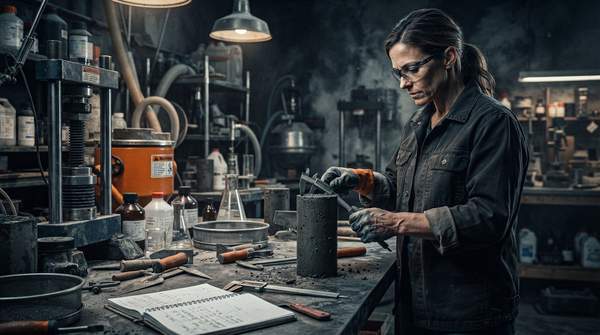
MIT engineers have invented 2DPA-1, a super-strong plastic twice as strong as steel. This breakthrough material points to a future where sustainable construction options could surpass conventional ones. Its unique two-dimensional sheet structure redefines material strength, offering a potent alternative to traditional, resource-intensive options.
Groundbreaking sustainable materials are emerging, and policy demand is increasing. However, cost-performance parity with conventional options and external economic pressures on material production remain significant barriers. The promise of revolutionary materials often collides with the practical realities of market economics and global supply chain volatility.
The widespread adoption of innovative sustainable construction materials will likely depend on overcoming current cost-performance challenges through strategic investment and policy support, rather than solely on technological advancement.
Beyond Bricks: Innovations Reshaping Construction
1. 2DPA-1 plastic
Best for: High-strength structural components, lightweighting applications, advanced composites
Description: MIT engineers developed 2DPA-1, a novel plastic with a unique two-dimensional sheet structure. This material exhibits exceptional strength, boasting an elastic modulus several times greater than bulletproof glass, and is twice as strong as steel, according to allplan. Its molecular arrangement allows for unprecedented strength and durability, potentially transforming structural components where weight and strength are critical.
Strengths: Exceptional strength (twice that of steel); high elastic modulus; lightweight | Limitations: Novelty means limited production scale and cost data; integration challenges with existing construction methods | Price: Currently high due to research and development phase
2. Carbon-fiber reinforced concrete
Best for: Infrastructure projects, high-rise buildings, structural repairs
Description: Carbon-fiber reinforced concrete enhances structural strength while reducing the overall amount of concrete needed. Its rust-proof nature and conductivity allow for built-in heating elements and structural integrity monitoring, as reported by allplan. Carbon-fiber reinforced concrete extends the lifespan of structures and enables smarter building management, offering a path to more resilient and adaptable infrastructure.
Strengths: Superior strength; reduced material use; rust-proof; integrated monitoring capabilities | Limitations: Higher initial material cost; specialized application techniques | Price: Premium
3. Hemp rebar
Best for: Coastal construction, foundations, non-corrosive environments
Description: Hemp rebar offers a sustainable alternative to traditional steel rebar, specifically designed to resist corrosion. It significantly reduces carbon emissions during production and has the potential to triple the service life of buildings, bridges, and other infrastructures, according to allplan. Hemp rebar improves durability in challenging conditions, making it a critical option for coastal or high-moisture environments where steel rebar fails prematurely.
Strengths: Corrosion resistance; reduced carbon footprint; extended infrastructure lifespan | Limitations: Lower tensile strength than steel; limited availability; regulatory acceptance | Price: Moderate, varies by supplier
4. Self-healing concrete
Best for: Roads, bridges, tunnels, basements, and other structures prone to cracking
Description: Self-healing concrete incorporates bacteria or chemical agents to automatically fill cracks, extending the lifespan of structures and reducing maintenance needs. Self-healing concrete adapts properties seen in ancient Roman concrete, where quicklime potentially tripled durability, according to allplan. Self-healing concrete proactively addresses structural integrity issues, promising to drastically cut long-term repair costs and extend infrastructure lifecycles beyond current expectations.
Strengths: Extends lifespan; reduces maintenance costs; autonomous crack repair | Limitations: Complex manufacturing process; long-term performance data still accumulating | Price: Higher than conventional concrete
5. Green roofs
Best for: Urban buildings, energy-efficient designs, stormwater management
Description: Green roofs involve installing vegetation over a waterproofing membrane, offering significant environmental benefits. They can reduce heat flux through the roof by 72%, according to us. Green roofs reduce building energy consumption and mitigate urban heat island effects, making them a vital strategy for sustainable urban development and climate resilience.
Strengths: Significant thermal insulation; stormwater retention; urban cooling; aesthetic value | Limitations: Higher initial installation cost; structural requirements for added weight; ongoing maintenance | Price: High
6. Recycled timber
Best for: Structural framing, flooring, decorative elements, furniture
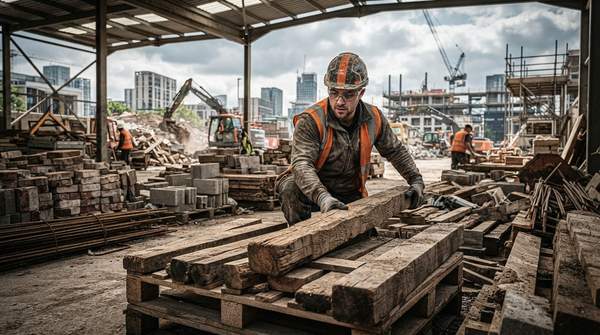
Description: Demand for recycled timber increased in Australia in October 2025 due to strengthened net-zero construction policies, according to Vocal Media. Recycled timber reduces landfill waste and the need for new timber harvesting, contributing to a circular economy in construction and demonstrating how policy can directly drive sustainable material adoption.
Strengths: Reduces waste; lower embodied energy; unique aesthetic; policy-driven demand | Limitations: Variable quality; potential for hidden fasteners; limited supply in some regions | Price: Variable, often competitive with new timber
7. Eco-concrete
Best for: General construction, foundations, slabs, pavements
Description: Eco-concrete, a broad category encompassing various sustainable concrete formulations, saw increased demand in Australia in October 2025 following strengthened net-zero construction policies, as reported by Vocal Media. Eco-concrete includes formulations with recycled aggregates or alternative binders to reduce carbon footprint, proving that even foundational materials can evolve to meet environmental mandates.
Strengths: Reduced environmental impact; policy-supported demand; versatility | Limitations: Performance can vary by formulation; may require specialized mixing | Price: Often comparable to conventional concrete, depends on specific type
8. Mycelium
Best for: Insulation, acoustic panels, non-load-bearing partitions, packaging
Description: Mycelium, the root structure of fungi, is listed as a sustainable building material, offering a bio-based, rapidly renewable resource for construction. It can be grown into various shapes and densities, providing lightweight and biodegradable building components, positioning mycelium as a key player in the future of truly regenerative construction. The global Bio Based Binder for Building Materials market is forecast to expand significantly from 2026 through 2035, according to IndexBox, indicating broader growth for bio-based solutions like mycelium.
Strengths: Renewable; biodegradable; lightweight; good insulation and acoustic properties | Limitations: Limited load-bearing capacity; moisture sensitivity; fire resistance concerns | Price: Emerging market, prices vary
The Cost-Performance Conundrum
| Material Category | Key Challenge | Market Segment Impact |
|---|---|---|
| Bio-based Binders | Cost-performance parity with conventional petrochemical binders remains a key challenge, according to IndexBox. | High-volume commodity applications struggle for widespread adoption due to cost. |
| Advanced Green Materials (e.g. 2DPA-1) | Achieving mass production scale and integration into existing supply chains. | Primarily targeting premium, performance-led segments due to superior capabilities and higher initial costs. |
| Conventional Materials | Environmental impact and regulatory pressures. | Dominant in high-volume, cost-sensitive segments, but facing increasing policy-driven competition. |
The market for bio-based materials is growing, but widespread adoption requires overcoming significant cost barriers. Companies relying solely on policy-driven demand for sustainable materials risk market stagnation if they ignore the fundamental cost-performance gap. IndexBox data on bio-based binders shows the market bifurcating into high-volume commodity applications and premium, performance-led segments. This means many 'green' innovations, despite superior performance, will remain niche due to cost, rather than achieving mass adoption.ss adoption.
The Economic Headwinds Facing Green Building
Rising fuel and polymer input costs, coupled with supply chain disruptions from Middle East conflicts, increased production and transport costs for key building materials in March 2026, according to Vocal Media. This economic volatility adds another layer of complexity, potentially slowing the adoption of even cost-competitive green alternatives. The vulnerability of global building material supply chains to geopolitical events means innovative sustainable solutions face an uphill battle against external economic pressures, demanding a radical rethinking of localized sourcing and production to build resilience. For more, see our Sustainable Building Materials for Eco-Conscious.
The future of sustainable construction appears to hinge on a delicate balance: technological breakthroughs must align with economic realities and robust policy frameworks, or their transformative potential will remain largely untapped.