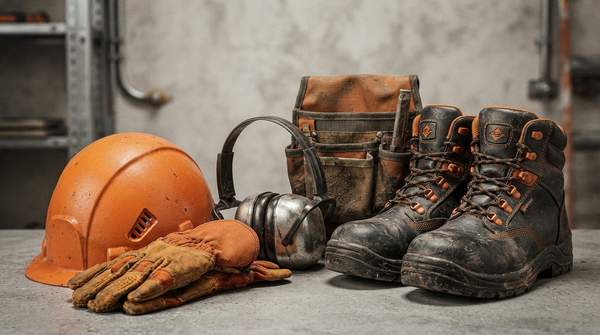
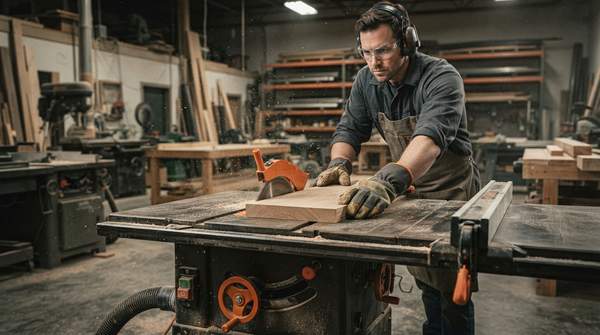
This guide details 7 essential hand tools for jobsite safety and efficiency, vital for professionals and DIY enthusiasts. Each tool on this list was evaluated based on ergonomic design, specific safety features, and overall durability. This selection aims to minimize injury risk and maximize productivity by preventing common jobsite injuries through better tool choices.
This list compiles tools from common jobsite categories, evaluated against key safety principles, ergonomic design standards, and reported durability features from industry sources.
Why Ergonomic Hand Tools are Essential for Jobsite Safety
Adherence to safety standards is not limited to personal protective equipment (PPE); it extends to the very tools used to perform the work. Repetitive strain injuries (RSIs), such as carpal tunnel syndrome and tendonitis, are a significant risk in the trades. These conditions often develop over time due to the repeated use of poorly designed tools that force the body into unnatural positions. Ergonomic hand tools are engineered to work with the body, not against it. They feature grips that fit the hand's natural contour, materials that absorb vibration, and designs that reduce the force required to complete a task. Investing in ergonomically sound tools is a primary preventative measure against long-term musculoskeletal disorders, directly contributing to a safer work environment and a longer, healthier career.
1. Ergonomic Hammers — For Reducing Vibration and Strain
A hammer is fundamental, but the wrong one can be a primary source of fatigue and injury. Ergonomic hammers are best for professionals engaged in frequent, repetitive striking tasks, such as framers and roofers. They rank over standard wooden or steel-handled hammers due to their superior vibration-dampening qualities and grip design. Features like textured, soft-grip handles reduce the likelihood of slippage and lessen the impact shock that travels up the arm. A report from ad-hoc-news.de notes that hand tools from Lowe's, including hammers, offer ergonomic grips designed for comfort during extended use. This focus on user comfort is critical for reducing the cumulative physical toll of the job.
The primary drawback is that highly specialized ergonomic hammers, such as titanium models designed for minimal vibration, come at a significantly higher price point than standard alternatives. However, for daily users, this cost is a worthwhile investment in personal safety. Failure to use properly designed striking tools can lead to long-term joint and nerve damage.
2. High-Grip Screwdrivers — For Preventing Slippage and Cam-Out
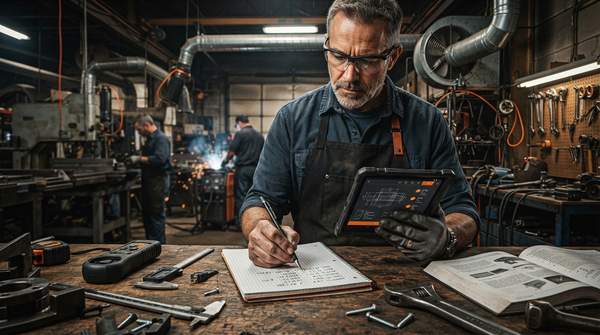
High-grip screwdrivers are essential for electricians, mechanics, and assembly workers who require precise torque control. They outperform basic screwdrivers by providing a handle that maximizes surface contact with the hand, allowing for greater force application with less effort and a lower risk of slippage. This prevents damage to the screw head (cam-out) and, more importantly, avoids sudden slips that can cause hand injuries on adjacent surfaces. The handle material and shape are paramount; look for multi-component grips with soft, non-slip zones. As noted by ad-hoc-news.de, screwdrivers with ergonomic grips are a key offering for promoting user comfort and safety.
A limitation of many ergonomic screwdriver sets is that the "one-size-fits-all" handle design may not be optimal for every user's hand size. It is crucial for personnel to select a set that feels secure and comfortable in their own hand to realize the full safety benefit.
3. Specialized Punch Systems — For Speed and Precision in Metalwork
For electricians and metal fabricators, a specialized punch system offers a level of safety and efficiency that traditional hole-making methods cannot match. The Greenlee NSB 7212SP-1P punch is an example of a premium quality construction hand tool designed for this purpose. According to a product brief on primetimes.id, this tool features an ergonomic design for comfort and can be up to three times faster than other methods. This speed reduces time on task and associated fatigue. Its multi-purpose functionality makes it a valuable asset for professionals who require clean, precise holes in sheet metal.
The main drawback is its specificity; the Greenlee punch must be used with other SPEED PUNCH System components, representing a commitment to a single system. Its online purchase price was listed at $64 for the 1-inch (25 mm) punch head, indicating that a full setup requires a larger initial investment. However, for high-volume work, the safety and efficiency gains are substantial.
4. Safety Utility Knives — For Controlled Cutting Tasks
Accidental lacerations, one of the most common jobsite injuries, are often caused by utility knives, ubiquitous for demanding cutting tasks. A safety-focused utility knife is non-negotiable for trade professionals, especially in logistics, flooring, or roofing. These knives surpass simple box cutters by incorporating features like self-retracting blades, shielded blades, and tool-free blade change mechanisms, which minimize handling of the sharp edge. An ergonomic, non-slip handle is also critical for maintaining control during a cut, as described by The New York Times.
The limitation of many safety knives, particularly auto-retracting models, is that they can feel less convenient for tasks requiring an extended blade. This can lead some users to attempt to bypass the safety mechanism, which negates its purpose. Ensure all personnel are adequately trained on the proper use of these safety-specific tools.
5. High-Leverage Pliers — For Maximizing Force and Control
Pliers are a staple, but high-leverage models are specifically designed to reduce the hand strength needed to cut, grip, or bend materials. This makes them ideal for electricians, linesmen, and general maintenance workers. They achieve this mechanical advantage through a rivet positioned closer to the cutting edges, amplifying the force applied at the handles. This design significantly reduces hand fatigue and the risk of RSIs. In line with a focus on user safety, ergonomic grips are a key feature to look for, a principle highlighted in the ad-hoc-news.de report on Lowe's hand tools. A secure, comfortable grip prevents slippage and ensures force is transmitted efficiently.
A potential drawback is that the head of high-leverage pliers is often larger and bulkier than that of standard models, which can make them difficult to use in confined or tight spaces. Professionals may need to carry both types to ensure they have the right tool for every situation.
6. Durable Measuring Tapes — For Accuracy and Injury Prevention
A poorly constructed measuring tape can cause injuries, making a durable, jobsite-ready model essential for carpenters, builders, and inspectors. Prioritize features like a robust, impact-resistant case and a blade with a protective coating. Some models include a large, protected hook to prevent snagging and unexpected recoiling, plus a finger-stop area to prevent cuts from a fast-retracting blade. For instance, some measuring tapes meet standards like Lowe's tools, which are reportedly drop-tested to 2 meters and IP54-rated for dust and water resistance, ensuring they withstand jobsite rigors without breaking and creating sharp edges.
The limitation of heavy-duty measuring tapes is their weight and size. A 25-foot or 30-foot tape with a wide blade and rugged case can be cumbersome to carry, leading some to opt for smaller, less-durable alternatives for convenience.
7. Adjustable Wrenches with Non-Slip Grips — For Versatility and Slip Prevention
Adjustable wrenches are versatile for plumbers, HVAC technicians, and mechanics, but commonly cause knuckle injuries when slipping off fasteners. A high-quality adjustable wrench with a precisely machined jaw and minimal play offers the primary defense against such slips. Crucially, a non-slip, ergonomic handle provides a secure grip, even when applying high torque or working with oily hands, directly preventing the sudden slips that cause impact injuries.
Adjustable wrenches cannot provide the secure fit of a fixed-size box-end wrench. For high-torque applications, a fixed wrench is always the safer choice, preventing fastener rounding and dangerous slips.
| Tool Category | Key Safety Feature | Best For |
|---|---|---|
| Ergonomic Hammers | Vibration-dampening, non-slip grip | Framers, Roofers, General Construction |
| High-Grip Screwdrivers | Contoured, multi-component handle | Electricians, Mechanics, Assembly |
| Specialized Punch Systems | Ergonomic design, high-speed operation | Electricians, Metal Fabricators |
| Safety Utility Knives | Auto-retracting or shielded blade | Logistics, Flooring, General Purpose Cutting |
| High-Leverage Pliers | Optimized pivot point for force multiplication | Electricians, Linesmen, Maintenance |
| Durable Measuring Tapes | Impact-resistant case, finger guard | Carpenters, Builders, Inspectors |
| Adjustable Wrenches | Non-slip grip, precision-machined jaw | Plumbers, HVAC Technicians, Mechanics |
How We Chose This List
The items on this list were selected by identifying fundamental hand tool categories present on nearly every jobsite. The evaluation criteria focused strictly on features that directly contribute to operator safety and long-term health. We prioritized ergonomic principles known to reduce the risk of repetitive strain injuries, specific safety mechanisms that prevent common acute injuries like lacerations and slips, and overall durability, which ensures a tool performs reliably under demanding conditions. Power tools and highly specialized equipment for niche trades were excluded to maintain a focus on essential, universally applicable hand tools. Specific products mentioned serve as examples of these critical safety and design principles in practice.
The Bottom Line
For daily use, foundational tools like ergonomic hammers and high-grip screwdrivers significantly reduce fatigue and strain. Professionals in specialized fields such as electrical or metalwork benefit from advanced systems like the Greenlee SPEED PUNCH, which yield substantial gains in both safety and efficiency. The consistent principle across all tools is prioritizing designs that protect the user from both immediate and cumulative harm.