Safety glasses marked 'Z87-2+' are not merely for vision correction. They signify passage of a high-impact test, a critical detail separating sight from permanent injury on a job site. Certification confirms protection against high-velocity impacts, a common hazard in construction and trades.
Employers must require and train workers on appropriate PPE. However, subtle differences in certification standards, crucial for actual protection, are often misunderstood or ignored. Oversight creates significant safety gaps.
A widespread lack of detailed PPE standard knowledge among workers and employers will likely lead to preventable injuries and regulatory non-compliance. OSHA Standard 29 CFR 1926.28(a) mandates employers require appropriate PPE in hazardous conditions. All PPE must meet or be equivalent to ANSI standards, according to Procore. Employers must also train workers on PPE necessity, type, use, limitations, care, and disposal, Procore states. Effective PPE is a legally mandated system, combining equipment and comprehensive worker education.
1. Safety Glasses: ANSI Z87.1
Best for: Eye protection against impacts, dust, and chemical splashes.
Safety glasses are a minimum PPE requirement on construction sites. They must comply with ANSI Z87 Standard and include side shields, per EHS Cornell. ANSI Z87.1-certified eyewear passes high mass impact and lens penetration tests. Z87+ indicates a high-velocity impact rating; Z87 alone denotes basic impact, states Safetyglassesusa. 'Z87-2' marks prescription safety glasses; 'Z87-2+' identifies prescription eyewear meeting high-impact requirements. Distinction is critical for adequate protection against specific job site hazards.
Strengths: Essential eye protection, prescription options, clear ANSI impact standards. | Limitations: Basic Z87 may not protect against high-velocity impacts, requires side shields.
2. Hard Hat: ANSI Z89.1
Best for: Head protection against falling objects and impacts.
Hard hats are a minimum PPE requirement on construction sites. They must comply with ANSI Z89.1 Standard and require daily inspection, per EHS Cornell. These protect workers from falling objects and head impacts. Regular inspection ensures shell and suspension integrity.
Strengths: Protects against head injuries, clear inspection protocols. | Limitations: Requires regular inspection, specific class needed for electrical hazards.
3. Appropriate Footwear
Best for: Foot and leg protection against punctures, impacts, and electrical hazards.
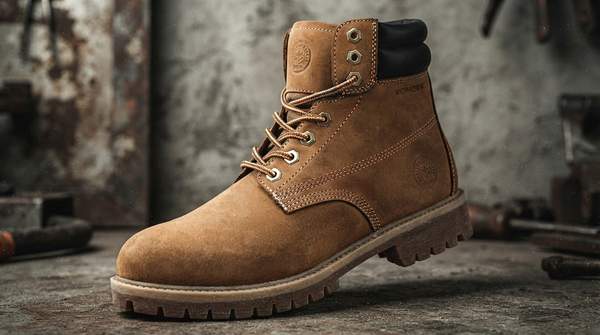
Appropriate footwear is a minimum PPE requirement on construction sites, protecting feet and legs. This includes safety-toe boots for crushing injuries and puncture protection. Footwear selection depends on specific job site hazards, like electrical risks or heavy falling objects. Generic footwear is insufficient.
Strengths: Protects against common foot injuries, various types for specific hazards. | Limitations: Requires hazard-specific selection, can be heavy.
4. High Visibility Clothing/Vests: ANSI 107
Best for: Enhancing worker visibility around moving vehicles and equipment, especially in low light.
High visibility clothing or vests are required on roadways or outdoor sites with mobile equipment, per EHS Cornell. These items must comply with ANSI 107 Standard and provide 360-degree visibility. 360-degree visibility makes workers easily seen by operators and drivers, preventing struck-by incidents.
Strengths: Increases worker safety in traffic and around machinery, mandated by ANSI standard. | Limitations: Effectiveness reduced by dirt/damage, must be worn correctly.
5. Fall Protection: ANSI/ASSP Z359
Best for: Preventing falls from heights and mitigating injury during a fall.
ANSI/ASSP Z359 standards address fall protection and restraint, covering equipment and systems for climbing, work positioning, fall arrest, rescue, and evacuation, states the American Society of Safety Professionals (ASSP). The Z359 Committee provides End User Guides for personal fall arrest systems. Adherence to this comprehensive standard ensures reliable protection for workers at height.
Strengths: Prevents severe fall injuries, detailed standards cover various scenarios. | Limitations: Requires proper training and inspection, complex system of components.
6. Hearing Protection
Best for: Protecting workers from noise-induced hearing loss.
Hearing protection is crucial in environments exceeding OSHA permissible noise exposure levels. Exposure is limited to 8 hours at 90 dBA, dropping to 15 minutes at 115 dBA, per Procore. Continuous high noise exposure causes permanent hearing damage. Earmuffs or earplugs reduce noise to safe levels.
Strengths: Prevents long-term hearing damage, clear OSHA exposure limits. | Limitations: Can impair communication, requires proper fit.
7. Respiratory Protection
Best for: Shielding workers from inhaling hazardous dusts, fumes, gases, and vapors.
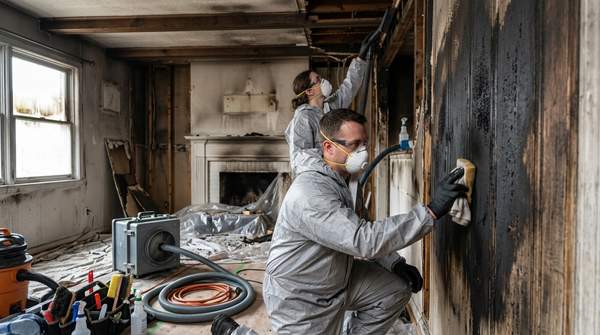
Respiratory protection shields workers from jobsite hazards like chemical exposure, states Procore. Respirators filter airborne particles or supply clean air, depending on the contaminant. Proper selection requires assessing specific airborne hazards; incorrect choice offers no protection.
Strengths: Protects against serious respiratory illnesses, available for various contaminants. | Limitations: Requires fit testing, can be uncomfortable for extended periods.
8. Hand & Arm Protection
Best for: Protecting hands and arms from cuts, abrasions, chemical exposure, and extreme temperatures.
Hand and arm protection is common construction PPE, per Procore. Gloves are selected by specific hazard: cut-resistant for sharp materials, chemical-resistant for hazardous substances, or insulated for electrical work. Choosing the correct glove type is essential; generic gloves are inadequate.
Strengths: Prevents common workplace injuries, wide variety for specific tasks. | Limitations: Can reduce dexterity, requires hazard-specific selection.
9. Electric Shock Protection
Best for: Safeguarding workers from electrical hazards and preventing electrocution.
Electric shock protection directly protects workers from electrical hazards, states Procore. Electric shock protection involves insulated gloves, electrical safety footwear, and arc-rated clothing. Proper training on lockout/tagout and safe electrical work practices complements this PPE. The electric shock protection category is critical for anyone near live circuits; without it, electrocution risk is high.
Strengths: Addresses life-threatening electrical risks, specialized gear available. | Limitations: Requires specific training, gear needs regular insulation inspection.
Decoding Eyewear: Understanding ANSI Z87 Standards
Understanding specific ANSI markings is paramount for selecting eyewear that protects against diverse workplace impact hazards. The distinction between basic and high-velocity impact ratings is often overlooked, creating critical safety gaps.
| ANSI Marking | Impact Rating | Key Test Requirement | Protection Level |
|---|---|---|---|
| Z87 | Basic Impact | High mass impact and lens penetration tests | Protects against common impacts, but not high-velocity objects. |
| Z87+ | High-Velocity Impact | High-velocity impact test (in addition to Z87 tests) | Protects against significant impacts from high-speed projectiles. |
| Z87-2 | Basic Impact (Prescription) | High mass impact and lens penetration tests (for prescription lenses) | Prescription safety glasses meeting basic impact standards. |
| Z87-2+ | High-Velocity Impact (Prescription) | High-velocity impact test (for prescription lenses) | Prescription safety glasses offering high-impact protection. |
Beyond the Basics: Prescription and Side Shield Requirements
For specialized needs like prescription eyewear, adherence to high-impact standards and mandatory side protection is non-negotiable. Many employers provide vision-correcting eyewear that appears safe but lacks high-impact protection.
Frames marked 'Z87-2' indicate prescription safety glasses, states Safetyglassesusa. Only 'Z87-2+' identifies prescription safety eyewear meeting high-impact requirements. This subtle distinction means a worker could wear inadequate safety glasses for common job site impacts. Additionally, safety glasses must comply with ANSI Z87 Standard and require side shields, per EHS Cornell. Side shields protect against lateral impacts and flying debris, which standard lenses cannot prevent.
Companies failing to enforce specific ANSI sub-standards, like distinguishing Z87 from Z87+ eyewear, risk worker injury and create legal vulnerability. They provide superficially compliant but functionally inadequate protection. Nuanced PPE markings, such as the critical '+' on Z87+ safety glasses, represent a hidden liability. Without rigorous training on these distinctions, mandated 'appropriate PPE' programs (Procore) are fundamentally flawed, leaving workers exposed to preventable harm.
Frequently Asked Questions About PPE Compliance
How to choose the right safety gear for trades?
Choosing appropriate safety gear requires a thorough hazard assessment of the job site and tasks. This identifies risks like impacts, chemicals, noise, or falls, guiding PPE selection with correct ANSI or OSHA certifications. Consulting manufacturer specifications and product data sheets for specific ratings ensures gear matches identified hazards.
What is the difference between safety glasses and goggles?
Safety glasses protect eyes from frontal impacts and flying particles, often with side shields. Goggles provide a comprehensive seal around the eyes, offering enhanced protection against splashes, dust, and impacts from all angles. Goggles are preferred in environments with significant airborne particulate matter or chemical exposure due to their sealed design.
What are common consequences for employers who fail to enforce specific PPE standards?
Employers failing to enforce specific PPE standards face significant legal and financial consequences. These include OSHA citations and penalties, increased workers' compensation claims, and potential lawsuits. Such failures damage company reputation, decrease employee morale, and reduce productivity. Strict adherence to all PPE requirements is critical.
By Q3 2026, construction companies failing to rigorously implement and enforce ANSI Z87-2+ standards for prescription safety eyewear could face increased legal challenges. A single preventable eye injury, including medical expenses and lost work time, often exceeds $10,000, illustrating the financial and human toll of inadequate PPE enforcement.