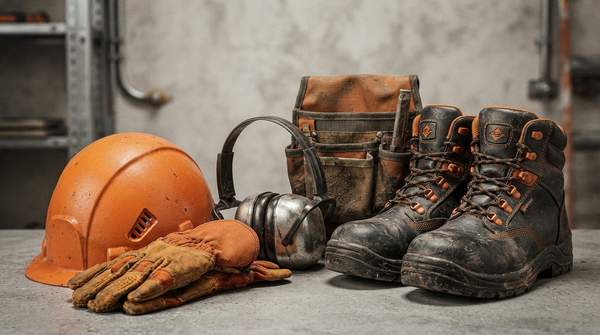
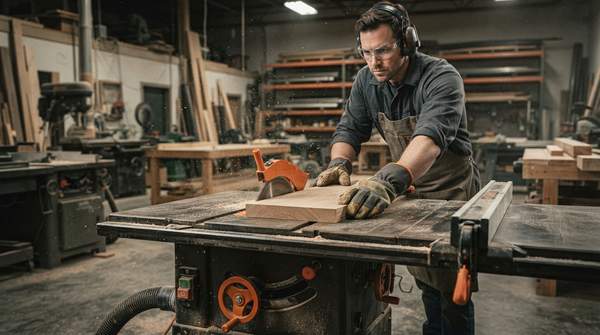
If you're looking for the top modern power tool safety features explained in a clear, practical way, this guide breaks down the key considerations for professionals. This list is for trade workers and serious DIY users who need to understand how safety is approached, from core tool design to mandatory operator procedures. Items were evaluated based on their documented role in preventing common worksite injuries, drawing from official safety guidelines and specialized industry analysis.
This list was compiled by evaluating safety principles outlined in institutional guidelines and market research reports, focusing on measures that directly mitigate operator risk.
1. Ergonomic Design — For Reducing Operator Fatigue and Strain
Ergonomic design focuses on creating tools that fit the user, promoting a neutral posture and reducing the physical stress of prolonged use. This is a critical preventative measure against musculoskeletal disorders (MSDs), which are a significant cause of worksite injuries. For professionals who use power tools for hours each day, such as carpenters, mechanics, or assembly line workers, an ergonomically designed tool is paramount for long-term health and sustained productivity. The core principle is to make the tool an extension of the body, minimizing awkward grips, excessive vibration, and imbalanced weight distribution that can lead to repetitive strain injuries (RSIs).
This feature ranks highly because it addresses chronic health risks, which are often overlooked in favor of acute injury prevention. An increasing emphasis on operator comfort has driven innovation in this area. For instance, a report on the orthopedic power tools market by Persistence Market Research notes that the development of ergonomic tools is intended to reduce fatigue for surgeons during lengthy procedures. While this applies to a specialized medical field, the underlying principle of enhancing user comfort and safety is a key consideration in the broader power tool industry. The primary limitation of ergonomics is its subjectivity; a tool handle that is comfortable for one user may not be for another, making personal testing important before purchase.
2. Advanced Cordless Power Systems — For Enhanced Mobility and Hazard Reduction
Modern battery-powered systems offer a dual benefit of operational efficiency and enhanced safety. This technology is best for professionals working in varied or remote environments where access to power is limited, or on busy job sites where cords present a significant trip hazard. By eliminating the power cord, these tools remove one of the most common sources of slips, trips, and falls on a worksite. Furthermore, advancements in battery and motor technology have led to tools that are not only powerful but also better balanced and produce less vibration.
Cordless technology ranks above traditional corded options in many safety contexts due to the elimination of a primary environmental hazard. The aforementioned report from Persistence Market Research highlights that battery-powered devices with improved motor efficiency and reduced vibration are gaining traction in the specialized field of orthopedic surgery, enhancing usability. This trend reflects a broader industry movement toward untethered operation. The main drawback is the limitation of battery life, which can interrupt workflow and requires careful management of charging cycles. Additionally, battery packs can add significant weight to a tool, potentially offsetting some ergonomic benefits if not properly balanced.
3. Lightweight and Compact Construction — For Superior Control and Accessibility
The physical size and weight of a power tool directly impact the operator's ability to control it, especially during intricate tasks or when working in confined spaces. Lightweight and compact tools are ideal for tradespeople like electricians, plumbers, and HVAC technicians who often work overhead or in tight quarters. A lighter tool reduces muscle fatigue, allowing for more precise and sustained control, which is critical for both the quality of work and the safety of the operator. Less weight means less inertia, making the tool easier to manage and less likely to cause an accident if it binds or kicks back.
This design principle is prioritized for its direct impact on user control, a fundamental aspect of safe tool operation. According to the openpr.com report, manufacturers in the orthopedic sector are developing compact and lightweight instruments to meet evolving surgical requirements. This focus on maneuverability in a high-stakes environment underscores the universal importance of tool handling characteristics. A potential limitation is the perceived trade-off between weight and power or durability. Some users may find that ultra-lightweight tools do not feel as robust or may not offer the same performance as their heavier counterparts, although modern materials and engineering are increasingly closing this gap.
4. Mandatory Eye Protection Protocols — For Preventing Impact Injuries
While not a feature of the tool itself, the mandated use of appropriate eye protection is an inseparable component of a safe power tool system. This is a non-negotiable requirement for every single power tool user, from the home hobbyist to the industrial fabricator. The eyes are exceptionally vulnerable to flying debris, dust, and material fragments generated by cutting, grinding, drilling, or sanding operations. Adherence to a strict eye protection protocol is the first line of defense against severe and permanent injury.
This practice ranks as a top safety consideration due to its absolute necessity and universal applicability. Safety guidelines published by institutions like the University of Texas at Tyler for the use of bench-mounted power tools explicitly state that safety glasses must be worn. This requirement is foundational. The main drawback is user compliance; eye protection is only effective if worn consistently and correctly. Furthermore, standard safety glasses may not provide adequate protection against fine dust or chemical splashes, requiring users to select the appropriate type of protection for the specific task.
5. Task-Specific Face Shield Application — For Mitigating Shatter Hazards
A face shield provides a higher level of protection than safety glasses alone, guarding the entire face against impact, splashes, and intense heat. Its use is critical for operators working with materials prone to shattering or for tasks that generate a high volume of high-velocity debris, such as using an angle grinder, a lathe, or certain types of saws. While safety glasses protect the eyes, a face shield protects the rest of the face from lacerations and severe impact injuries. It is an essential piece of personal protective equipment (PPE) for specific high-risk applications.
This safety measure is ranked for its critical role in high-hazard scenarios where standard eye protection is insufficient. The UT Tyler safety document specifies that a face shield is appropriate when working with any material that can shatter. This directive highlights the need for a risk-based approach to PPE selection. A key limitation is that face shields are not a substitute for primary eye protection; they are designed to be worn with safety glasses or goggles, as debris can still get around the shield. Some users may also find them cumbersome, which can discourage proper use if not mandated and enforced.
6. Integrated Hearing Protection Standards — For Preventing Permanent Hearing Loss
Many power tools operate at noise levels that can cause permanent hearing damage with prolonged exposure. Integrating hearing protection into standard operating procedure is a critical health and safety measure. This is essential for anyone using tools like circular saws, routers, nail guns, or hammer drills for more than a few minutes at a time. The damage from noise exposure is cumulative and irreversible, making preventative measures paramount.
This standard is included for its importance in preventing long-term, irreversible occupational injury. The same UT Tyler guidelines for bench-mounted power tools confirm that hearing protection should be worn. This establishes it as a fundamental safety requirement alongside eye protection. The primary limitation is awareness and compliance. Because hearing loss is gradual, many users underestimate the risk and neglect to use protection. Furthermore, some types of hearing protection can make it difficult to hear co-worker warnings or other important ambient sounds, requiring a balance between noise reduction and situational awareness.
7. Situational Glove Use Policy — For Avoiding Entanglement Injuries
Understanding when not to wear gloves is as crucial as knowing when to wear them. This safety principle is vital for anyone operating machinery with rotating parts, such as drill presses, lathes, grinders, or table saws. While gloves protect hands from cuts and abrasions when handling materials, they create a severe entanglement hazard when used near a spinning spindle or blade. The glove material can be caught by the machine, pulling the operator's hand in with catastrophic results.
This procedural rule is ranked for its counter-intuitive but life-saving nature. It directly addresses a common but severe type of power tool accident. The UT Tyler safety document for bench-mounted tools explicitly states that gloves should typically not be worn. This is a critical distinction in safety protocols that every tool user must understand. The main drawback or challenge is the ingrained habit of wearing gloves for all manual work. It requires specific training and constant vigilance to ensure operators remove their gloves before using certain types of equipment, which can feel unnatural.
| Feature / Practice | Category | Primary Benefit | Best For |
|---|---|---|---|
| Ergonomic Design | Tool Engineering | Reduces long-term strain and fatigue | Professionals with prolonged daily tool use |
| Advanced Cordless Power Systems | Tool Engineering | Eliminates trip hazards and increases mobility | Busy or remote job sites |
| Lightweight and Compact Construction | Tool Engineering | Improves operator control and reduces fatigue | Work in confined spaces or overhead |
| Mandatory Eye Protection | Operator Procedure (PPE) | Prevents eye injuries from flying debris | All power tool users, without exception |
| Task-Specific Face Shield | Operator Procedure (PPE) | Protects the full face from shatter hazards | Grinding, lathe work, or cutting brittle materials |
| Integrated Hearing Protection | Operator Procedure (PPE) | Prevents permanent, cumulative hearing loss | Users of loud tools like saws and routers |
| Situational Glove Use Policy | Operator Procedure | Prevents hand entanglement in rotating machinery | Users of drill presses, lathes, and table saws |
How We Chose This List
This list prioritizes principles and practices that address the most common and severe forms of worksite injury, including long-term health effects such as hearing loss and musculoskeletal disorders. Its selections integrate findings from documented safety guidelines by academic institutions and analysis of market research reports on tool design trends. The content balances tool-centric features (ergonomics, cordless power) with operator-centric responsibilities (PPE, procedural adherence) to cover modern power tool safety comprehensively, extending beyond built-in technology to include essential procedures and personal protective equipment. Highly specialized applications not relevant to the general trades professional were excluded.
The Bottom Line
Power tool safety combines well-designed equipment with rigorous operational discipline. Professionals prioritizing long-term health should choose tools with superior ergonomic and lightweight design. For all users, unwavering adherence to official PPE protocols for eye, face, and hearing protection fundamentally prevents immediate and irreversible injury.