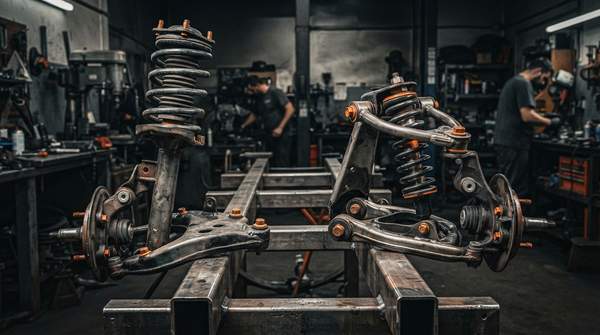
This guide ranks common DIY car repair mistakes by their potential to escalate costs and create significant safety hazards for home mechanics. Automotive enthusiasts performing their own maintenance and repairs can use this list to understand pitfalls and ensure successful, safe vehicle upkeep.
Automotive service professionals reported information used to compile this ranking, evaluating common DIY repair scenarios for potential personal injury, increased repair costs, and voided warranties.
7. Failing to Consult a Vehicle-Specific Repair Manual
Relying solely on generic online video tutorials, assuming a procedure for one model year applies universally, is a foundational error. Enthusiasts often make this mistake; a video for a similar car may miss subtle but critical differences for your vehicle's specific make, model, and year. This leads to incorrect repairs, damaged components, or needing to redo the job.
Modern vehicles are increasingly complex systems. According to a report by Roper Honda, even seemingly simple tasks like changing a headlight bulb can now require removing the entire front bumper assembly. Relying on a generic guide could leave you with a disassembled vehicle and no clear path to putting it back together. Always invest in a factory service manual or a reputable third-party equivalent (e.g., Haynes, Chilton) for your exact vehicle. It provides torque specifications, wiring diagrams, and procedural nuances that general guides omit.
6. Using Incorrect Fluids or Parts
This mistake is particularly prevalent among DIYers trying to save money with universal fluids or budget aftermarket parts. Using the wrong type of engine oil, transmission fluid, coolant, or brake fluid can cause accelerated wear and catastrophic component failure. For example, modern transmissions, especially CVTs, require highly specific fluids; using a generic alternative can destroy sensitive internal components, leading to a multi-thousand-dollar replacement.
Beyond fluids, using non-OEM (Original Equipment Manufacturer) parts during a repair can have serious consequences. For vehicles under warranty, this action may risk voiding coverage. Roper Honda notes that Honda vehicles, for instance, come with a 3-year/36,000-mile limited warranty and a 5-year/60,000-mile powertrain warranty that could be jeopardized by improper repairs or parts. To avoid this, always verify the exact fluid specifications in your owner's manual and cross-reference part numbers before making a purchase.

5. Improperly Tightening Fasteners
Overtightening or undertightening bolts and nuts, common among mechanics who 'feel' for tightness, causes significant damage. Overtightening strips threads, cracks components like aluminum oil pans or valve covers, or stretches bolts, causing stress failure. Undertightening is equally dangerous, allowing critical components like wheels, suspension parts, or brake calipers to loosen over time, creating severe safety hazards.
To prevent persistent fluid leaks or catastrophic component failure while driving, use a calibrated torque wrench for every critical fastener. Your vehicle's service manual provides exact torque specifications for drain plugs to cylinder head bolts. This step adds minutes but prevents costly damage and ensures parts are secured as intended.
4. Underestimating Job Complexity
This error is common with ambitious DIYers who, after successfully completing a few basic maintenance tasks, decide to tackle a major repair like a timing belt replacement or transmission service. Modern vehicles are technologically sophisticated, and many jobs that were once simple now require deep system knowledge. SSC Mechanics provides examples where DIY repairs can exacerbate existing problems, turning a manageable issue into a complex one.
The primary consequence is getting in over your head, resulting in a disassembled, immobile vehicle that must be towed to a professional shop. This not only negates any potential cost savings but often increases the final bill, as the technician must first correct the botched attempt before performing the original repair. Before starting any job, research the entire procedure, identify any required specialized tools, and make an honest assessment of your skill level. If the job involves critical systems like airbags, advanced driver-assistance systems (ADAS), or the fuel system, it is often best left to a professional.
3. Using the Wrong Tools for the Job
Attempting a repair without the correct equipment is a recipe for frustration and damaged parts. This mistake is often made by beginners trying to make do with a basic socket set. Many automotive repairs, however, necessitate specialized tools, as noted by Affordable Automotive Repair. Examples include ball joint presses, spring compressors, or manufacturer-specific diagnostic scanners. Using pliers to remove a sensor instead of the proper socket, or a standard screwdriver where an impact driver is needed, can easily break the part you are trying to fix.
The direct result is often a simple job becoming expensive because a part was destroyed during removal or installation. Before you begin, research the required tools. Many specialty tools can be rented from auto parts stores, providing a cost-effective way to do the job correctly. Having the right equipment not only makes the repair possible but also safer and more efficient. For a list of foundational equipment, review these essential automotive DIY tools.
2. Misdiagnosing the Root Cause
This is one of the most costly and time-consuming mistakes. It involves jumping to conclusions and replacing parts based on a symptom rather than a confirmed diagnosis. A DIYer might, for example, replace an alternator because the battery isn't charging, only to find the real issue was a corroded ground wire. This error is common for those who rely on generic advice from online forums without performing systematic diagnostic tests.
The consequence is a "parts cannon" approach—firing expensive new parts at a problem without fixing it. This wastes significant money and time, and the original, potentially dangerous, problem persists. To avoid this, adopt a diagnostic mindset. Start with the simplest possibilities first. Check fuses, relays, and wiring connections before condemning a major component. Use a multimeter to test electrical circuits. Invest in a quality OBD-II scanner to read trouble codes and live data, which can point you toward the root cause instead of just the symptom.
1. Ignoring Basic Safety Procedures
This is the most critical mistake because its consequences are not financial but physical. It is most common among DIYers who are rushing or have become complacent. Safety shortcuts include working under a car supported only by a jack, failing to disconnect the battery before electrical work, or working without safety glasses and gloves. Roper Honda explicitly highlights these safety concerns, noting risks from unstable jacks, sharp metal edges, and vehicle electrical systems.
The potential consequences are severe personal injury or worse. A vehicle can weigh over two tons; a falling car can be fatal. To prevent this, never compromise on safety. Always use high-quality jack stands on a level, solid surface to support the vehicle. Disconnect the negative battery terminal before working on electrical components to prevent shorts or accidental airbag deployment. Wear appropriate personal protective equipment (PPE), including eye protection and gloves. For more on this topic, consider these innovative safety technologies that highlight the importance of protocol.
| Mistake (Rank) | Primary Consequence | Prevention Tip | Who's Most at Risk? |
|---|---|---|---|
| 1. Ignoring Safety Procedures | Severe personal injury or death | Always use jack stands, disconnect the battery, and wear PPE. | All DIYers, especially those who are rushed or overly confident. |
| 2. Misdiagnosing the Root Cause | Wasted money on unneeded parts; original problem persists. | Perform systematic diagnostics before buying or replacing parts. | Enthusiasts who rely on symptoms rather than testing. |
| 3. Using the Wrong Tools | Damaged parts, stripped fasteners, and incomplete repairs. | Research and acquire all necessary tools before starting the job. | Beginners with a limited or basic toolset. |
| 4. Underestimating Job Complexity | An immobile vehicle requiring a professional tow and repair. | Thoroughly research the procedure and assess your skill level honestly. | Ambitious DIYers moving from basic to advanced repairs. |
| 5. Improperly Tightening Fasteners | Stripped threads, fluid leaks, or component failure from loosening. | Use a calibrated torque wrench and follow manual specifications. | Mechanics who rely on "feel" instead of precise measurements. |
| 6. Using Incorrect Fluids or Parts | Accelerated wear, component failure, and voided warranties. | Verify all fluid and part specifications in the owner's manual. | DIYers looking to cut costs with generic or universal products. |
| 7. Failing to Consult a Manual | Incorrect procedures, damaged components, and wasted time. | Obtain a vehicle-specific factory service or third-party manual. | Enthusiasts who rely exclusively on generic online videos. |
How We Chose This List
The items on this list were selected and ranked based on a synthesis of common issues reported by automotive service centers like European Autotech. The primary criteria for ranking were the potential severity of the consequences, evaluated across two key dimensions: safety risk to the individual and the likelihood of significant cost escalation. Mistakes with a higher potential for causing physical harm were ranked highest, followed by those most likely to turn a small, inexpensive repair into a major, costly one. This list focuses exclusively on errors common among hobbyists and enthusiasts and excludes mistakes specific to professional diagnostic environments.
The Bottom Line
Successful DIY auto repair requires preparation, precision, and prioritizing safety. Methodical work and proper research avoid dangerous, costly mistakes like ignoring safety protocols or misdiagnosing problems. Beginners should master basics with a vehicle-specific manual and correct tools, and always entrust complex or safety-critical jobs to certified professionals.