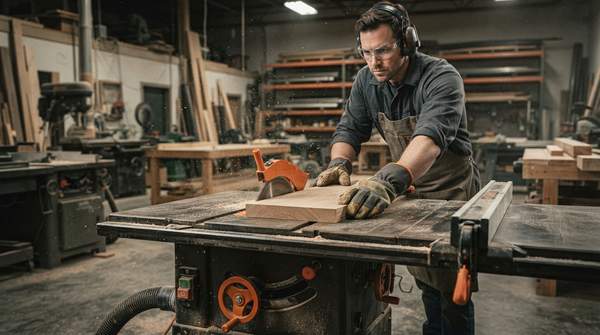
This guide outlines 10 essential safety items, organized by the trades that depend on them most. Industry standards require professional tradespeople to use specific personal protective equipment (PPE) to minimize injury risk, with gear varying significantly based on distinct trade hazards. Adherence to these guidelines is paramount for individual safety and regulatory compliance.
1. Best PPE for Construction Workers
Construction environments are unpredictable, making essential safety gear non-optional. Hard hats, protective eyewear, and steel-toed boots are critical for protecting against common job site hazards, a requirement emphasized by safety equipment supplier TPR Industrial.
Hard Hat
A hard hat is the primary defense against head injuries from falling tools, flying debris, and accidental impact with structural elements. For sites with electrical hazards, specialized hard hats provide an additional layer of protection. As outlined by safety products company Novarlo, hard hats should be ANSI/ISEA Z89.1 certified. Class G (General) hats are rated for 2,200 volts, while Class E (Electrical) are rated for 20,000 volts.
- Use Case: Head protection is a non-negotiable requirement on construction sites due to constant overhead and impact hazards.
- Key Data: ANSI/ISEA Z89.1 certification is the standard. Look for Type I for top impact or Type II for top and lateral impact.
- Limitation: Hard hats have an expiration date and must be replaced immediately after sustaining a significant impact, even if no damage is visible.
Steel-Toed Boots
Steel-toed boots are critical for foot protection in environments with heavy materials, machinery, and sharp objects. They shield feet from crushing injuries by falling objects and punctures from below, a requirement confirmed by organizations like West Virginia Women Work. This makes them a staple in construction and manufacturing.
- Use Case: Construction sites' dynamic nature, with constant material and equipment movement, creates a high risk of foot injuries.
- Key Data: Look for ASTM F2413-18 rating, which specifies standards for impact resistance, compression resistance, and other protective features.
- Limitation: They are typically heavier and less flexible than standard work boots, which can contribute to fatigue over a long workday.
High-Visibility Clothing
High-visibility clothing, made of bright, reflective materials, ensures workers stand out in busy work zones with vehicle and heavy equipment traffic, preventing tragic accidents. This gear is essential for road crews, site surveyors, and anyone working near moving machinery.
- Why it fits this use case: It directly counteracts the risk of "struck-by" incidents, which are a leading cause of fatalities in construction.
- Key Data: ANSI/ISEA 107 standard classifies garments from Type O, R, or P and Performance Class 1, 2, or 3 based on the amount of reflective material and its placement.
- Limitation: The effectiveness of the garment is significantly reduced when it is dirty, faded, or obstructed. Regular cleaning and inspection are required.
2. What safety gear do electricians need?
Electricians face unique risks, primarily electrical shock and arc flash. Their PPE is specifically designed to insulate them from electrical currents and protect them from the intense heat and pressure of an arc flash event. Failure to comply with these specific PPE requirements may result in severe penalties and life-threatening injury.
Flame-Resistant (FR) Clothing
Standard clothing can ignite and continue to burn in an arc flash incident. FR clothing is engineered to self-extinguish, drastically reducing the severity of burn injuries. For electricians working in areas with both visibility and arc flash hazards, high-visibility FR clothing is available.
- Why it fits this use case: It is the primary defense against thermal hazards from an arc flash, which can produce temperatures hotter than the sun's surface.
- Key Data: FR clothing carries an Arc Thermal Performance Value (ATPV) and should meet NFPA 70E standards. Novarlo notes that common ratings are CAT 2 to CAT 4.
- Limitation: FR garments require special laundering procedures to maintain their protective qualities and are significantly more expensive than standard workwear.
Insulated Gloves
Rubber-insulated gloves are a critical barrier between an electrician and a live electrical current. They are rated by voltage class (from Class 00 to Class 4) and must be selected based on the voltage of the circuit being worked on. They are typically worn with leather protectors to prevent physical damage.
- Why it fits this use case: Provides direct protection from the primary hazard of the electrical trade: electric shock.
- Key Data: Voltage ratings are crucial. Class 00 is rated for a maximum use of 500V AC, while Class 4 is rated for 36,000V AC.
- Limitation: Insulated gloves must be visually inspected and air-tested for leaks before every single use. A pinhole leak can render them completely ineffective.
Safety Glasses or Goggles
An arc flash can eject molten metal and shrapnel at high speeds. Safety glasses or a full-face shield are essential for preventing catastrophic eye injuries. Even routine tasks like cutting wire or drilling into junction boxes can create projectiles that necessitate eye protection.
- Why it fits this use case: Protects eyes from both the intense UV light and the physical projectiles generated during an arc flash or other electrical work.
- Key Data: Look for an ANSI Z87.1+ rating, which indicates high-impact protection.
- Limitation: Can fog in certain conditions, potentially obscuring vision. Anti-fog coatings or ventilated designs can mitigate this issue.
3. Essential Safety Equipment for Plumbers and HVAC Technicians
Plumbers and HVAC technicians face hazards including sharp materials, loud equipment, and wet or slippery surfaces across diverse environments, from crawl spaces to rooftops. Their personal protective equipment (PPE) must therefore be versatile and robust.
Cut-Resistant Gloves
Cut-resistant gloves provide a protective barrier against constant risks of cuts and abrasions from handling sheet metal, cutting pipes, and working with worn fixtures. They aim to preserve the dexterity needed for detailed work.
- Use Case: These gloves directly mitigate lacerations from sharp metal and materials, one of the most frequent injuries in these trades.
- Key Data: ANSI/ISEA 105 standard rates cut resistance on a scale from A1 to A9. Novarlo suggests a rating of A4 or higher for substantial protection.
- Limitation: Higher levels of cut resistance can sometimes mean thicker material, which may reduce tactile sensitivity for handling small fasteners or wires.
Hearing Protection
Earplugs or earmuffs reduce noise exposure to safe levels for workers around loud equipment like air handlers, pumps, grinders, and saws. This hearing protection prevents permanent damage while allowing crucial sounds such as alarms or co-worker communication to be heard.
- Protects against long-term, irreversible hearing loss from consistent noise levels common in HVAC and plumbing work.
- The Noise Reduction Rating (NRR), measured in decibels (dB), indicates protection level; appropriate NRR depends on the work environment's noise.
- Improper fit drastically reduces effectiveness; personnel must be trained on correct insertion of earplugs or wearing of earmuffs.
Waterproof Safety-Toe Boots
Waterproof boots with a safety toe and a slip-resistant sole protect plumbers and HVAC technicians from impact and compression injuries. They also keep feet dry and provide stable footing in frequently wet and slippery conditions.
- Provides multi-functional protection from falling objects, punctures, and common slip-and-fall hazards in wet work areas.
- Check for ASTM F2413-18 rating for the safety toe and a specific rating for slip resistance (SR).
- Waterproofing membranes can reduce breathability, potentially causing discomfort in hot environments.
First Aid Kit and Eyewash Station
Universal safety requires immediate first aid access, with workplace safety supplier Darman stressing the importance of readily available eyewash stations and first aid kits. These enable quick medical care, preventing minor injuries from worsening. Mobile tradespeople must keep a well-stocked kit in their vehicle.
- Why it fits this use case: Provides immediate response capability for the cuts, scrapes, chemical splashes, and debris-in-eye incidents common to all trades.
- Key Data: ANSI/ISEA Z308.1-2021 standard outlines the minimum required contents for workplace first aid kits.
- Limitation: Supplies must be regularly inspected for expiration dates and restocked after use to remain effective and compliant.
| Item Name | Best For (Primary Trade) | Key Metric / Rating | Key Strength |
|---|---|---|---|
| Hard Hat | Construction | ANSI/ISEA Z89.1 | Protects against head impact and electrical shock. |
| Steel-Toed Boots | Construction | ASTM F2413-18 | Prevents crushing and puncture foot injuries. |
| High-Visibility Clothing | Construction | ANSI/ISEA 107 | Prevents "struck-by" incidents in busy areas. |
| Flame-Resistant (FR) Clothing | Electrical | NFPA 70E (CAT 2-4) | Minimizes burn injury during arc flash events. |
| Insulated Gloves | Electrical | Voltage Class (00-4) | Provides primary insulation from electric shock. |
| Safety Glasses/Goggles | All Trades | ANSI Z87.1+ | Protects eyes from projectiles and chemical splash. |
| Cut-Resistant Gloves | Plumbing/HVAC | ANSI Cut Level (A1-A9) | Prevents lacerations from sharp materials. |
| Hearing Protection | All Trades | Noise Reduction Rating (NRR) | Prevents long-term, noise-induced hearing loss. |
| Waterproof Safety-Toe Boots | Plumbing/HVAC | ASTM F2413-18 / SR | Combines impact protection with slip resistance. |
| First Aid Kit | All Trades | ANSI/ISEA Z308.1 | Enables immediate response to common injuries. |
The Bottom Line
Hazard assessment dictates correct safety gear, not preference. Construction workers prioritize impact protection and visibility. Electricians require insulation and arc flash defense. Plumbers and HVAC technicians need versatile hand and foot protection against various environmental hazards. The equipment listed here serves as a baseline; specific job sites may demand additional or more specialized PPE.