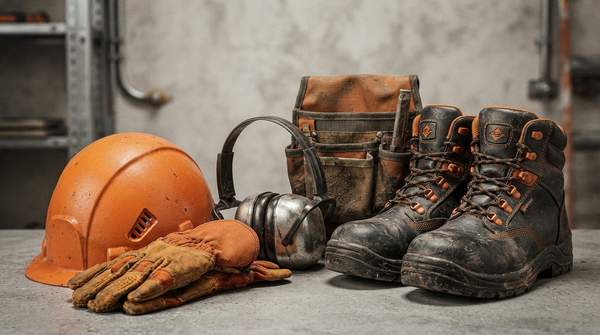
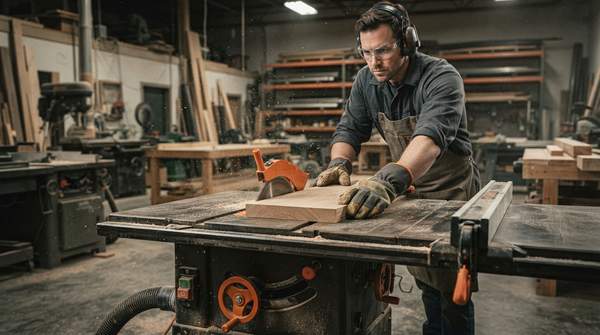
This guide details critical safety systems in modern power tools, protecting trade professionals and serious DIYers from common and severe operational hazards on the job site. Each feature was evaluated based on its ability to mitigate risks, drawing from established safety principles for equipment selection.
Foundational safety principles from authoritative sources, including the Power Tool Institute and institutional guidelines, informed this list of critical equipment safety and user protection features.
1. Comprehensive Guarding Systems — For Direct Hazard Prevention
Guards are the first line of defense against contact with blades, bits, and other moving parts. Professionals operating saws, grinders, or routers should prioritize tools with robust, non-removable guards that cover the operational hazard without impeding visibility. While fixed guards are standard, look for tools with self-adjusting or retractable guards that adapt to the workpiece, offering continuous protection. Adherence to safety protocols regarding guards is paramount, as guidance from safety resources like Harvard Environmental Health and Safety consistently emphasizes keeping all guards in place and in good working order.
Guards are non-negotiable for cutting or grinding tools, providing a physical barrier against catastrophic injury. While some guards can feel cumbersome or obstruct intricate cuts, tempting improper removal, a well-designed guard integrates safety without significantly compromising function. Always ensure guards are durable and securely attached.
2. Appropriate Power Switches — For Operational Control
The type of power switch is a critical feature for controlling a tool, especially during a malfunction or loss of balance. For handheld tools like grinders and circular saws, a constant-pressure switch (or "dead-man" switch) is a key safety feature. It ensures the tool deactivates the moment the user releases their grip. For stationary tools, a large, easily accessible off-switch is vital. Look for tools that also incorporate a lock-off or lock-on switch where appropriate, preventing accidental startup during transport or bit changes.

Constant-pressure switches are ideal for professionals using handheld tools in dynamic environments, offering an immediate, instinctual shutdown to prevent dropped or mishandled tools from operating. A drawback is user fatigue during long, continuous run-times; in such cases, a lock-on feature—quickly disengageable—may suit trained users.
3. Electrical Safety Systems — For Shock Prevention
Modern power tools provide fundamental electric shock protection via double insulation or three-wire grounding. Double-insulated tools, marked with a square-within-a-square symbol, feature two insulation layers and don't require a three-prong plug. Grounded tools use a third wire to safely direct stray electrical current away from the user. Incorrect use can lead to severe penalties and injury.
Grounding is a universal, foundational requirement for all corded power tool users because electrical hazards are often invisible and fatal. User error is the primary limitation; using a grounded tool with an ungrounded or damaged extension cord negates protection. Always inspect cords and plugs before use and never bypass the grounding pin.
4. Dust Management Systems — For Respiratory Health
Many power tool operations—sanding, cutting, and grinding—generate harmful airborne dust. Modern tools increasingly incorporate integrated dust collection ports that allow for direct connection to a vacuum or extractor. This feature is crucial for protecting long-term respiratory health. For tools used on materials like concrete or engineered stone, an effective dust shroud and extraction system is not just a feature but often a regulatory requirement.
This is essential for woodworkers, masons, and drywall installers. An integrated dust port is superior to passive dust bags because it actively removes contaminants at the source. The main drawback is the additional equipment required; a dedicated dust extractor adds cost and reduces mobility. However, the health benefits and cleaner work environment are significant trade-offs.
5. Kickback Reduction Features — For Preventing Violent Reactions
Kickback occurs when a tool's blade or bit binds in the material, causing the tool to violently thrust back at the operator. This is a primary cause of severe injury with tools like circular saws and chainsaws. Look for tools that incorporate features designed to mitigate this risk. On circular saws, this can include a riving knife that prevents the kerf from closing on the blade. More advanced tools may feature electronic sensors that shut down the motor when a sudden binding event is detected.
For high-torque cutting tools, this critical feature prevents dangerous accidents. Mechanical systems like riving knives require proper alignment; electronic systems may have overly sensitive sensors in demanding applications, though this is still preferable to no protection.
6. Vibration Dampening — For Long-Term User Health
Prolonged exposure to vibration from power tools can lead to Hand-Arm Vibration Syndrome (HAVS), a painful and debilitating condition. Manufacturers have developed anti-vibration technologies that isolate the tool's handles from its motor and impact mechanism. Look for tools that explicitly advertise vibration control, often using separated handles, counterweights, or padded grips. This is particularly important for high-impact tools like rotary hammers, reciprocating saws, and sanders.
Vibration control is crucial for occupational health, especially for professionals using impact or oscillating tools daily for extended periods. While tools with advanced systems are often heavier and more expensive, the investment is a critical personal protective strategy for full-time users.
7. Ergonomic Design — For Reducing Fatigue and Improving Control
A tool that is well-balanced and fits comfortably in the hand is inherently safer. Ergonomic design focuses on reducing user strain, which in turn minimizes the risk of mistakes and accidents caused by fatigue. Key ergonomic features include rubberized, non-slip grips, logical control placements, and a balanced weight distribution that doesn't force the user into awkward positions. The importance of proper tool handling is a consistent theme in training materials, such as those described as "high-impact" leader resources by American Training Resources.
Ergonomics are critical for all users, particularly those performing repetitive tasks or working overhead, as superior design increases productivity and reduces long-term strain injuries. However, ergonomics are subjective; what feels balanced to one user may not to another, so handling a tool before purchase is always best.
8. Integrated Illumination — For Work Area Visibility
Built-in LED lights on modern cordless tools combat poor visibility, a direct contributor to accidents. This simple feature illuminates the immediate work area, significantly improving precision and safety in dimly lit spaces like basements, cabinets, or engine bays. Prioritize lights positioned to minimize shadows around the blade or bit.
Onboard lighting benefits electricians, plumbers, and mechanics, offering an advantage over external lighting, which is difficult to position. The only drawback is a negligible battery drain on most modern tool platforms.
9. Secure Accessory Fastening — For Preventing Projectiles
A tool's blade, bit, or accessory securing method is a core safety feature; a failing chuck or blade clamp can turn an accessory into a dangerous projectile. Prioritize heavy-duty, all-metal chucks on drills, robust clamping mechanisms on saws, and collets that grip router bits securely. While keyless chucks and tool-free blade changes offer convenience, they must be robust enough to withstand job site torque and vibration.
A secure fastening system is crucial for all power tool users, especially in high-speed or high-torque applications. It is superior to older, keyed designs if it provides equivalent or greater holding force with improved ease of use. However, some tool-free systems can be complex and may wear over time, requiring inspection and maintenance to ensure secure grip.
10. Clear Markings and Manuals — For Proper Use and Maintenance
Onboard warnings, diagrams, and the user manual are essential safety features, providing manufacturer-specific instructions for operation, maintenance, and capabilities. A tool with worn, unreadable labels should be viewed with caution. Ensure any tool purchased comes with a comprehensive manual detailing all safety systems and their functions. Adherence to these guidelines is paramount.
Following manufacturer's instructions is foundational for every user, novice to expert; ignoring them is a leading cause of misuse and injury. The only limitation is the user's willingness to read and follow the guidance. A tool is only as safe as the person operating it.
| Safety Feature/System | Primary Function | Best For (Application) | Key Consideration |
|---|---|---|---|
| Guarding Systems | Prevents contact with moving parts | Cutting and grinding tools | Ensure guard is functional and never removed. |
| Appropriate Power Switches | Provides operational control | Handheld, high-power tools | Match switch type (e.g., dead-man) to the task. |
| Electrical Safety | Prevents electric shock | All corded tools | Verify double insulation or use proper grounding. |
| Dust Management | Protects respiratory health | Sanding, cutting, masonry work | Requires connection to a compatible vacuum. |
| Kickback Reduction | Prevents violent tool reactions | Circular saws, chainsaws | Understand and maintain mechanical/electronic systems. |
| Vibration Dampening | Reduces long-term nerve damage | Impact and demolition tools | Adds cost and weight but is crucial for daily users. |
How We Chose This List
This list was developed by identifying fundamental safety principles that mitigate the most common and severe risks associated with power tool use. Instead of focusing on proprietary brand technologies, we prioritized broad safety categories that apply across all manufacturers. The selection was guided by a review of established safety standards and guidelines from respected organizations that provide information on tool-specific safety, ensuring the features chosen represent a consensus on best practices for operator protection. We excluded features that are highly specialized or do not directly contribute to mitigating immediate physical or electrical hazards.
The Bottom Line
Selecting a power tool requires looking beyond performance metrics and considering the integrated systems designed to protect you. For professionals using high-risk tools like saws, features like guarding and kickback reduction are paramount. For those in finishing trades, dust management and ergonomics should be primary considerations. Ultimately, the safest power tool is a combination of well-designed equipment and a well-trained operator who understands its features and limitations.