Lowe's $250M for 250K Workers: Valuing Skills Amid AI Growth

Lowe's is committing a quarter of a billion dollars over the next decade to train 250,000 skilled tradespeople.

RD
Rick Donovan

April 13, 2026 · 3 min read

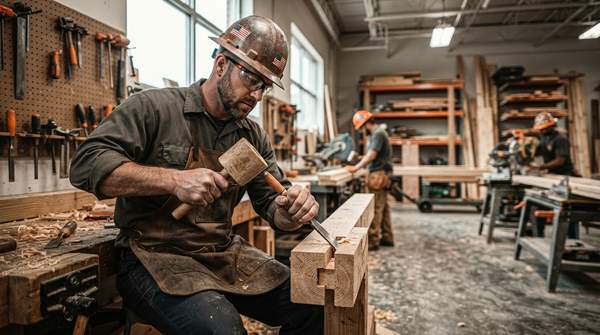
Split image showing a futuristic AI interface and a skilled tradesperson working, symbolizing the balance between technology and human expertise in the modern workforce.

Lowe's is committing a quarter of a billion dollars over the next decade to train 250,000 skilled tradespeople. This move marks a profound shift in workforce strategy, directly addressing a critical labor shortage by cultivating a strong pipeline of talent in essential hands-on professions.

However, this initiative unfolds as AI drives double-digit productivity gains in Lowe's tech and administrative functions. The company is simultaneously making its largest-ever investment in human skilled trades, creating a strategic tension within its operational strategy.

Companies are increasingly recognizing that while AI optimizes many roles, human expertise in physical, hands-on trades offers a distinct, AI-resistant value proposition, leading to diversified workforce investments.

The Scale and Specifics of Lowe's Commitment

Lowe's foundation will invest $250 million toward training workers in fields like plumbing, carpentry, and electrical over the next 10 years, according to MoneyWise. This commitment builds on previous efforts, adding to over $50 million already invested in training programs, as reported by the same source. The cumulative investment signals a sustained, escalating belief in the necessity of a strong skilled workforce. It positions Lowe's as a key player in shaping a future where tangible skills remain paramount, even as digital tools advance.

Lowe's Dual Approach: AI for Internal Efficiency

Lowe's leverages AI to enhance associate sales, improve the shopping environment, and boost workspace productivity, according to The Times of India. Simultaneously, tech workers use AI for code development and review, achieving double-digit productivity gains, ET BrandEquity reported. Internal AI adoptions align with a broader industry push to automate administrative and technical tasks. A clear dichotomy with Lowe's investment in human trades is created, solidifying a dual strategy: optimize what can be automated, and aggressively build what cannot. A ceiling to AI's direct value in customer-facing, hands-on service is implicitly acknowledged.


Marvin Ellison's Strategic Rationale: Valuing Human Skills in an AI Era

Lowe's CEO Marvin Ellison stated that AI will increasingly dominate administrative and analytical occupations, making skilled-trades initiatives more important, according to Black Enterprise. Ellison further believes skilled trades offer rewarding, viable careers that create meaningful wealth and a dignified living with less debt. The combined perspective frames skilled trades as a strategic counter-balance to AI's impact, offering stable, dignified careers less susceptible to automation. The implication for 2026 is clear: these roles become critical anchors in a shifting job market.

If Lowe's sustained investment proves successful in cultivating a robust, AI-resistant workforce, other major retailers and industries will likely follow suit, reshaping national workforce development priorities.

What are the current limitations of AI in skilled trades training?

AI currently struggles with hands-on, physical tasks requiring dexterity, problem-solving in unstructured environments, and direct human interaction. Lowe's CEO Marvin Ellison explicitly noted that AI "cannot climb a ladder," highlighting a key limitation for physical trades that demand real-world application and tactile skills.

How is AI impacting skilled trades education?

AI's impact on skilled trades education primarily involves supplementary tools like virtual reality simulations for initial training or predictive analytics for student progress. It does not replace the essential hands-on practical experience required for mastery in fields like plumbing or electrical work, which still relies heavily on human instruction and practice.

Will AI replace skilled trades workers?

While AI can automate administrative and analytical functions, it is less likely to replace skilled trades workers in roles requiring complex physical dexterity, on-site problem-solving, and direct client interaction. Lowe's $250 million investment to train 250,000 tradespeople over the next decade confirms these hands-on professions are largely "AI-proof" and will remain critical.