Automotive Services

Automotive Electrical System Troubleshooting: A Complete Guide for Technicians

A vehicle with a phantom electrical issue can be a technician's nightmare. This guide provides a logical, repeatable process to turn guesswork into a precise diagnostic workflow for automotive electrical systems.

LO
Luis Ortega

April 7, 2026 · 8 min read

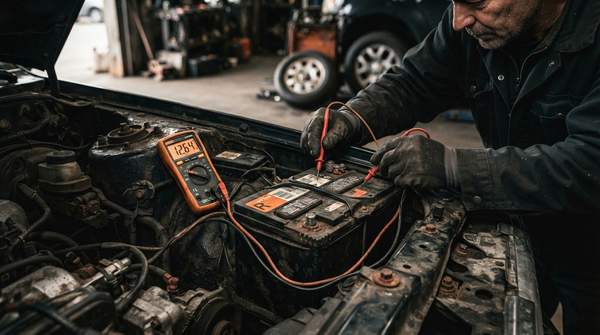
An automotive technician meticulously diagnosing a complex electrical system in a car's engine bay, surrounded by wires and diagnostic equipment, demonstrating expertise in troubleshooting vehicle electronics.

When a vehicle arrives with a phantom electrical issue—a flickering light, an intermittent failure, or a parasitic drain that kills the battery overnight—the guesswork often begins. This automotive electrical system troubleshooting guide for technicians provides a logical, repeatable process to transform that guesswork into a precise diagnostic workflow. Troubleshooting complex vehicle electronics is a methodical skill, no more difficult than any other diagnostic procedure when approached with the right strategy and tools.

What Is Automotive Electrical System Troubleshooting?

Automotive electrical system troubleshooting is the logical, systematic process for identifying, locating, and correcting faults within a vehicle's electrical circuits. This process moves beyond simply replacing components, focusing instead on understanding circuit behavior to pinpoint the exact cause of failure—be it an open circuit, a short circuit, or excessive resistance. It involves using specialized tools like digital multimeters and interpreting wiring diagrams to follow a path of evidence, ensuring accurate and efficient repairs. A proficient technician combines foundational electrical principles with structured, repeatable testing procedures for successful diagnoses.

Step-by-Step Guide to Diagnosing Car Electrical Problems

Diagnosing electrical faults effectively requires a disciplined, step-by-step approach. This method saves time, prevents unnecessary parts replacement, and builds confidence in your diagnostic conclusions. Follow these steps for precise symptom-to-solution diagnostics.

  1. Step 1: Verify the State of the Battery

    Before you begin any other diagnostic test, you must confirm the vehicle has a good, fully charged battery. According to a report from Clore Automotive, countless experts cite this as the mandatory first step. It is reportedly nearly impossible to accurately diagnose an electrical problem on a vehicle with a low or faulty battery, as insufficient voltage can cause a wide range of misleading symptoms, from erratic module behavior to false trouble codes. First, perform a visual inspection for corrosion, damage, or loose connections. Next, test the battery's state of charge and its overall health using a professional battery tester. A healthy battery should have approximately 12.6 volts at rest and should maintain voltage above 9.6 volts during a load test.

  2. Step 2: Understand the Symptom and the Circuit

    Clearly define the problem. Is a component not working at all? Is it working intermittently? Is there a parasitic draw? Document the specific conditions under which the fault occurs. According to CarTechBooks, a thorough knowledge of the problem and the affected circuit are essential diagnostic tools in their own right. If a power window is inoperative, for example, understand how its circuit works. Identify the components involved: the fuse, the switch, the motor, the body control module (if applicable), and all related wiring and connectors. This initial information-gathering phase is critical for building a logical diagnostic plan.

  3. Step 3: Obtain and Analyze the Wiring Diagram

    The wiring diagram, or schematic, is your roadmap. It is an indispensable tool that shows you every component, wire, splice, connector, and ground point in the circuit. Leading experts emphasize that you cannot effectively troubleshoot modern vehicle electronics without accurate schematics. Take time to trace the flow of electricity from the power source (battery/fuse box), through the control device (switch/relay), to the load (motor/bulb), and finally to the ground. Identify wire colors, connector pin locations, and the physical location of components within the vehicle. This analysis allows you to form a hypothesis about where the fault might be located.

  4. Step 4: Formulate a Diagnostic Plan

    With a clear understanding of the circuit, create a logical testing plan. A procedure recommended by CarTechBooks is to start with the most obvious potential problems first and work systematically from one end of the circuit to the other. Avoid the temptation to start testing in the middle of the circuit, as this can lead to confusion and missed steps. For a non-functional component, a logical plan might be: check the fuse first, then verify power at the switch, then check for power and ground at the component itself. This linear approach ensures no potential failure point is overlooked.

  5. Step 5: Perform Systematic Testing

    Execute your plan using the appropriate tools, primarily a quality Digital Multimeter (DMM). A DMM is essential for measuring voltage, resistance (ohms), and continuity.

    • Voltage Tests: Measure the electrical pressure at various points. Checking for voltage at a component connector tells you if power is reaching the load.
    • Voltage Drop Tests: This measures the voltage lost across a section of a circuit due to unwanted resistance. It is an extremely effective test for finding poor connections, corroded wires, and faulty grounds.
    • Resistance Tests: Measure the opposition to current flow. This is used to test components like sensors or solenoids and to check for continuity in a wire. Remember to only perform resistance tests on a circuit with the power off.
    • Continuity Tests: A simple type of resistance test that confirms a complete path for current to flow. It's ideal for checking fuses or verifying an unbroken wire from one point to another.
    Use a wire probe kit for accessing connector pins without causing damage. Document your readings at each step.

  6. Step 6: Isolate and Confirm the Fault

    Your test results will point you toward the location of the fault. If you have 12 volts going into a switch but 0 volts coming out when it's activated, the switch is likely faulty. If you have power and ground at a motor but it doesn't run, the motor has failed. In one troubleshooting example from CarTechBooks, a non-working reverse light on a 1972 Olds Cutlass was diagnosed by confirming power was present at the bulb socket. The final step of wiggling the bulb caused it to light up, isolating the problem to a poor connection within the socket itself. Before replacing any part, perform a final confirmation test. For instance, you can use jumper wires to bypass a suspected faulty switch to see if the component activates. This confirmation step prevents the unnecessary replacement of good parts.

Common Mistakes in Automotive Electrical System Troubleshooting

To ensure efficient and accurate diagnostics, avoid these common pitfalls, which even experienced technicians can fall into.

  • Guessing Instead of Testing: The "parts cannon" approach—firing new parts at a problem—is expensive, inefficient, and fails to identify the root cause. A systematic, test-based approach is always superior.
  • Skipping the Battery Check: Many technicians jump into complex circuit testing without first verifying the electrical system's foundation. A weak battery or poor battery cable connections can mimic dozens of other electrical faults; always start here.
  • Overlooking Grounds: A significant percentage of automotive electrical problems are caused by poor ground connections, which create excess resistance and prevent correct circuit function. Always check the ground side of the circuit with the same diligence as the power side.
  • Testing Without a Plan: Randomly checking for voltage or resistance without a clear plan based on a wiring diagram is inefficient. This "spaghetti" approach wastes time and often leads to incorrect conclusions. Follow your plan from one end of the circuit to the other.

Advanced Considerations for Electrical Diagnostics

Mastering fundamentals allows technicians to incorporate more advanced techniques and concepts into their workflow, solving the most challenging electrical issues.

Mastering the Voltage Drop Test for Parasitic Drains: A systematic approach that combines wiring schematics with voltage drop testing is highly valuable for diagnosing parasitic draws. Instead of pulling fuses one by one (which can reset modules and hide the problem), you can measure the minuscule voltage drop across the top of each fuse without removing it. A fuse with a measurable voltage drop (even just a few millivolts) indicates that current is flowing through that circuit. This allows you to quickly identify the circuit responsible for the drain without disturbing the system.

Viewing the System Holistically: Modern vehicles are complex networks of interconnected modules. It is crucial to view the electrical system as a whole, as a problem in one area can easily affect another. For example, a fault on a CAN bus network can cause seemingly unrelated symptoms in multiple systems. Understanding this interconnectedness is key to diagnosing network and module communication issues.

Using Diagnostic Flowcharts: Manufacturer-provided diagnostic flowcharts significantly reduce troubleshooting time by offering a step-by-step decision tree. These guides, like "If voltage is X, go to Step 5; if voltage is Y, test component Z," provide the most efficient diagnostic path for specific trouble codes or symptoms. Seeking them out in service information can be a major time-saver.

Frequently Asked Questions

What are the essential diagnostic tools for automotive electrical troubleshooting?

According to analysis from CarTechBooks, the essential tools include a solid understanding of the symptom and the circuit, an accurate circuit diagram (wiring schematic), a quality Digital Multimeter (DMM), and a good wire probe kit to safely access connector terminals without causing damage.

Can a bad ground cause multiple electrical problems?

Absolutely. A single, main ground point—such as a primary engine-to-chassis ground strap—can serve multiple circuits. If this connection becomes corroded or loose, it can cause a wide array of seemingly unrelated issues, from dim headlights and slow cranking to erratic sensor readings and network communication errors.

How do I perform a basic voltage drop test on a ground circuit?

First, set your DMM to a low DC volts scale (e.g., 2V). Next, with the circuit activated (e.g., headlights on), connect the positive DMM lead to the negative battery post. Then, connect the negative DMM lead to the component's ground connection point on the chassis or engine block. A reading of more than 0.1-0.2 volts indicates excessive resistance in the ground circuit that needs to be corrected.

Why is a fully charged battery so important for diagnosis?

A low battery provides insufficient system voltage, which can cause electronic control modules to behave erratically, set false diagnostic trouble codes, or fail to operate altogether. Attempting to diagnose a vehicle with low voltage is like trying to diagnose a fuel delivery problem with an empty gas tank; the foundational element is missing, making all subsequent tests unreliable.

The Bottom Line

Automotive electrical system troubleshooting is a structured, methodical process. Starting with fundamentals—a verified battery and clear wiring diagram—and following a logical testing plan enables confident diagnosis and repair of complex electrical faults. This disciplined approach saves time, increases first-time-fix rates, and solidifies your reputation as a proficient diagnostic technician.