Automotive Services

Top 7 Essential Automotive Repair Techniques for Hybrid and Electric Vehicles

This guide details the advanced diagnostic and repair methods every professional automotive technician must master for hybrid and electric vehicles. Expand your skills beyond internal combustion engines with these essential techniques.

LO
Luis Ortega

April 7, 2026 · 8 min read

A professional automotive technician safely performing advanced diagnostics on a high-voltage electric vehicle battery in a modern, well-equipped repair facility, highlighting specialized skills.

For professional automotive technicians and advanced enthusiasts expanding skills beyond internal combustion engines, this guide details essential advanced diagnostic and repair methods for hybrid and electric vehicles. Techniques are ranked by their impact on safety, diagnostic accuracy, and the specialized knowledge required to service modern EV and hybrid systems.

The techniques prioritize effective, safe solutions for common HEV/EV failure points, based on technical bulletins and industry training standards.

1. High-Voltage System De-Energization and Verification — The Foundational Safety Protocol

This technique is the non-negotiable starting point for any repair on a high-voltage (HV) system. It involves isolating the high-voltage battery from the rest of the vehicle and confirming a zero-voltage state before any components are touched. It ranks first because failure to perform this step correctly can result in severe injury or death. According to the Electric Vehicle Safety & Repair Institute (EVSRI), improper de-energization procedures are reportedly a factor in a significant number of high-voltage incidents in repair shops.
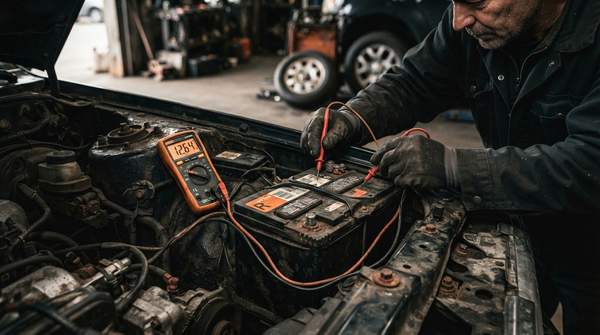
Establishing a safe working environment, essential for every technician, requires locating and removing the main service disconnect plug. Technicians must then wait a manufacturer-specified 5-10 minutes for capacitors to discharge, followed by using a CAT III or CAT IV rated multimeter with insulated probes to verify zero voltage between high-voltage connection points. While this mandatory wait time adds service duration, it is a critical safety requirement. As detailed in our guide to essential safety practices, establishing a safe state is always the first priority.

2. Insulation Resistance Testing — For Proactive Fault Detection

Insulation resistance testing, often performed with a megohmmeter, is critical for detecting the degradation of insulation around high-voltage conductors. This degradation can lead to intermittent faults, voltage leakage to the chassis, and potentially catastrophic short circuits. This technique ranks highly because it allows a technician to find problems that a standard multimeter or diagnostic trouble code (DTC) might miss. It is a proactive measure to ensure the integrity of the entire high-voltage system, from the battery pack to the inverter and motor.

This technique is best for technicians performing advanced diagnostics or annual inspections on HEV/EVs. It is superior to simple visual inspection, as microscopic cracks or moisture intrusion in insulation are invisible to the naked eye. A study published in the Journal of Advanced Automotive Engineering noted that insulation breakdown is a leading cause of difficult-to-diagnose HV system faults. The main limitation is the requirement for specialized equipment—a megohmmeter, or insulation tester—and the knowledge to interpret its readings correctly. Applying incorrect test voltages can damage sensitive electronics, so following OEM procedures is crucial. Test voltages are typically 500V or 1000V, and a healthy system should show resistance readings in the giga-ohm range.

3. Battery State-of-Health (SOH) Analysis and Module Balancing — For Cost-Effective Battery Repair

Rather than replacing an entire high-voltage battery pack—a costly procedure—this technique involves diagnosing the pack at the module or cell level. State-of-Health (SOH) analysis uses advanced diagnostic tools to assess the capacity and internal resistance of individual battery modules. If weak modules are identified, they can sometimes be replaced and the pack can be "balanced" to ensure all modules share the same state of charge. This technique is a game-changer for independent shops looking to offer a more affordable alternative to a full battery replacement from the dealer.

This is best for specialized EV technicians or battery remanufacturing centers. Its key advantage is the immense cost savings for the vehicle owner and the reduction in waste. However, the process is complex and carries significant risk. Working inside a live battery pack requires extensive training and personal protective equipment (PPE). Furthermore, sourcing individual modules can be difficult, and not all battery pack designs facilitate easy module replacement. The need for specialized equipment, including a capable scan tool and a battery module charger/balancer, presents a high barrier to entry.

4. Resolver and Position Sensor Diagnostics — For Precision Powertrain Diagnosis

Electric motors in HEVs and EVs rely on precise rotor position data to operate efficiently. This data is provided by a resolver or other position sensors. When these sensors fail or degrade, it can cause a wide range of symptoms, from hesitation and reduced power to a complete no-start condition. This diagnostic technique involves using an oscilloscope to analyze the sensor's output waveforms, comparing them against known-good patterns to identify faults.

This method is for the advanced diagnostician who is comfortable with oscilloscope usage and waveform analysis. It ranks above simple component replacement because it allows for definitive confirmation of a fault before expensive parts are ordered. A resolver itself may be relatively inexpensive, but the labor to access and replace it within the motor or transaxle assembly is significant. The primary drawback is the skill required. Interpreting oscilloscope waveforms takes practice and a deep understanding of how the sensor functions. A technician must be able to identify issues like low amplitude, noise, or incorrect phasing in the sensor's sine and cosine wave outputs.

5. CAN Bus Network Analysis for EV/Hybrid Systems — For Complex System Troubleshooting

Modern EVs and hybrids operate via a complex network of control modules communicating over Controller Area Network (CAN) bus lines. The battery management system (BMS), inverter, on-board charger, and motor controller all must communicate flawlessly. A fault in this network can cause cascading failures that are impossible to diagnose with a simple DTC scan. This technique involves tapping into the CAN bus with a breakout box and an oscilloscope or specialized CAN bus analyzer to monitor the data packets directly.

This is a high-level technique for master technicians tackling "nightmare" electrical problems. Its superiority lies in its ability to pinpoint the exact source of a communication breakdown—be it a faulty module, a wiring issue, or network interference. This avoids the costly and time-consuming process of sequentially replacing modules. The limitation is its extreme complexity. A technician must understand CAN bus protocol, including how to read packet IDs and data, and differentiate between a normal and a corrupted signal. This requires some of the most advanced automotive diagnostic tools available today.

6. On-Board Charger (OBC) and DC-DC Converter Diagnostics — For Power Electronics Repair

The On-Board Charger (OBC) and the DC-DC converter are foundational power electronics components. The OBC converts AC power from the grid into DC power to charge the high-voltage battery, while the DC-DC converter steps down high-voltage DC to 12V DC to power the vehicle's standard accessories and charge the 12V battery. When a vehicle fails to charge or its 12V system dies, these components are often the culprit. This technique involves verifying inputs and outputs, checking for internal faults with a capable scan tool, and inspecting liquid cooling systems that service these units.

This is best for technicians specializing in the charging and power supply subsystems of EVs. The advantage of mastering this is the ability to service a high-failure-rate area that is unique to electrified vehicles. According to a technical bulletin from AutoTech Diagnostics, OBC failures are one of the top five reported issues for aging EVs. The drawback is that these components are often sealed, non-serviceable units, meaning diagnosis often leads to replacement rather than repair. However, correctly identifying the OBC or DC-DC converter as the fault, and not a wiring or battery issue, still saves significant diagnostic time.

7. Thermal Management System Diagnostics — For Longevity and Performance

High-voltage batteries and power electronics generate significant heat. A sophisticated liquid-cooling and heating system is required to keep them within their optimal operating temperature range (typically 20-40°C). A failure in this system—a pump, a valve, or a coolant leak—can lead to reduced performance, faster battery degradation, and eventual component failure. This technique involves using a scan tool to actuate pumps and valves, pressure testing the cooling loops, and using an infrared camera to check for hot spots.

This technique is crucial for any technician performing routine maintenance on an HEV/EV. It ranks on this list because maintaining battery health is central to the vehicle's long-term value and performance. Proactively servicing the thermal system is superior to reactively replacing a battery that has been damaged by overheating. A report from Weber State University's Automotive Technology Department emphasizes that proper thermal management is the single most important factor in battery longevity. The limitation is that these systems can be complex, with multiple cooling loops and specialized coolants. Bleeding the air out of these systems after a repair often requires a vacuum-fill tool and a specific, software-driven procedure.

TechniquePrimary FocusKey ToolingBest For
High-Voltage De-EnergizationSafetyCAT III/IV Multimeter, Insulated GlovesAll Technicians
Insulation Resistance TestingFault PreventionMegohmmeterAdvanced Diagnostics
Battery SOH AnalysisComponent-Level RepairAdvanced Scan Tool, Module BalancerBattery Specialists
Resolver/Sensor DiagnosticsPowertrain DiagnosisOscilloscopeAdvanced Diagnosticians
CAN Bus Network AnalysisElectrical TroubleshootingOscilloscope, CAN AnalyzerMaster Technicians
OBC/DC-DC Converter DiagnosticsPower ElectronicsScan Tool, MultimeterCharging System Specialists
Thermal Management DiagnosticsLongevity & MaintenanceScan Tool, Coolant Pressure TesterGeneral & Preventative Maintenance

How We Chose This List

The techniques on this list were selected and ranked based on a hierarchy of needs for the modern automotive technician. Safety was the primary criterion, placing High-Voltage De-Energization at the top as a non-negotiable first step. We then prioritized techniques that address the most common and challenging failure points unique to HEV/EVs, such as battery health, power electronics, and motor control systems. Methods that allow for component-level repair over full assembly replacement were ranked highly due to their value proposition. We excluded general automotive skills like brake or suspension work, which, while important, are not unique to electrified powertrains. The focus remains on the high-voltage and advanced electronic systems that represent the core challenge and opportunity in this evolving field, a challenge that will require new training supported by initiatives like skilled trades grants.

The Bottom Line

New hybrid and electric vehicle technicians must master High-Voltage De-Energization and Insulation Resistance Testing for safe, effective service. To become specialists, experienced professionals should develop proficiency in Battery SOH Analysis and CAN Bus Network Analysis, enabling them to differentiate diagnostic capabilities and tackle the industry's most complex repairs.