A single home built with hempcrete can sequester more carbon than it emits over its lifetime, a stark contrast to traditional concrete, which accounts for 8% of global CO2 emissions. Many perceive sustainable building materials as a premium, niche option. Yet, their long-term economic benefits and environmental necessity are making them a mainstream imperative. Companies investing in these materials will gain a significant competitive advantage; those clinging to outdated practices risk obsolescence.
The construction industry generates nearly 40% of global energy-related CO2 emissions, according to the UN Environment Programme. This demands urgent material innovation. The global green building market is projected to grow from $300 billion in 2022 to over $700 billion by 2030, as reported by Grand View Research. The global green building market's projected growth from $300 billion in 2022 to over $700 billion by 2030, coupled with operational cost reductions of up to 30% over a building's lifetime (World Green Building Council), proves companies relying solely on upfront cost comparisons are making financially unsound decisions.
The Top 5 Eco-Friendly Building Materials Redefining Construction
1. Hempcrete
Best for: Wall systems, insulation, thermal mass
A 12-inch thick hempcrete wall offers an R-value of R-2.5 per inch, superior thermal insulation to traditional concrete, states HempBuild Magazine. This lightweight, breathable material regulates indoor humidity, prevents mold, and sequesters carbon during growth, achieving a negative carbon footprint. Its unique properties make it ideal for climate-resilient structures.
Strengths: Carbon-negative | Excellent thermal and acoustic insulation | Fire-resistant | Mold-resistant | Limitations: Not load-bearing | Requires skilled application | Longer drying times | Price: Moderate to high upfront, lifecycle savings
2. Recycled Steel
Best for: Structural framing, roofing, rebar
Recycled steel production cuts energy consumption by 75% and air pollution by 86% compared to virgin steel, according to the Steel Recycling Institute (data from 2020). Steel is 100% recyclable without property loss, making it a truly circular material. Its strength-to-weight ratio enables efficient, durable structures, offering a sustainable backbone for modern construction.
Strengths: High strength | 100% recyclable | Reduces waste | Durable | Limitations: High embodied energy in initial production | Can be susceptible to corrosion if untreated | Price: Competitive with virgin steel, market-dependent
3. Bamboo
Best for: Flooring, structural elements, decorative finishes
Bamboo grows up to 3 feet daily, maturing in 3-5 years, making it one of the fastest-renewing building resources, according to Forestry Journal. Its tensile strength often rivals steel, offering a robust, aesthetic alternative to traditional timber. Rapid growth also means significant CO2 absorption, making it a powerful carbon sink.
Strengths: Rapidly renewable | High tensile strength | Versatile | Aesthetic appeal | Limitations: Requires treatment for pests/moisture | Sourcing can impact embodied carbon | Price: Moderate to high, depending on product
4. Mycelium-based Insulation
Best for: Thermal insulation, acoustic panels, packaging
Mycelium-based insulation blocks achieve an R-value of R-3.5 to R-4 per inch, outperforming many synthetic foams while being fully compostable, reports MycoWorks Research. Grown from fungal roots using agricultural waste, it minimizes resource depletion. It also offers natural fire resistance and breathability, proving that high performance can come from natural, circular processes.
Strengths: High R-value | Biodegradable | Low embodied energy | Fire-resistant | Limitations: Limited load-bearing capacity | Currently smaller scale production | Price: Moderate to high, expected to decrease with scale
5. Reclaimed Wood
Best for: Flooring, structural beams, decorative accents
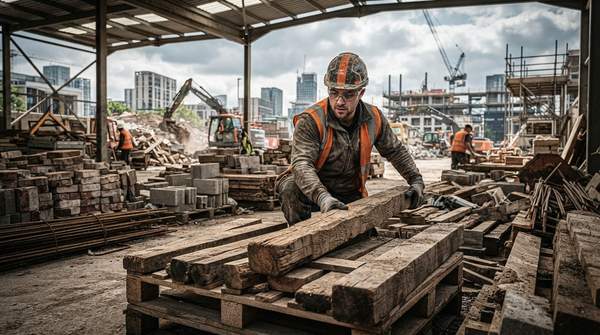
Utilizing reclaimed wood prevents an estimated 15 million tons of timber from entering landfills annually in North America, according to Waste Management Review. Utilizing reclaimed wood extends the life of existing resources, reducing demand for new logging and its environmental impacts. Often possessing unique character and structural integrity from old-growth timber, reclaimed wood offers both sustainability and superior quality.
Strengths: Diverts waste from landfills | Reduces demand for virgin timber | Unique aesthetic | Often stronger than new wood | Limitations: Availability can vary | May require de-nailing/processing | Price: Can be premium, depending on rarity and species
These materials offer diverse, effective solutions for reducing building environmental footprints. The accelerating demand for green-certified properties, evidenced by higher rents and sale prices, means developers ignoring sustainable materials are leaving significant market value and brand differentiation on the table.
Eco-Friendly vs. Conventional: A Performance Showdown
| Material Category | Eco-Friendly Option | Conventional Alternative | Key Metric: Embodied Carbon (kg CO2e/m³) | Thermal Performance (R-value/inch) | Typical Upfront Cost |
|---|---|---|---|---|---|
| Wall Systems | Hempcrete | Traditional Concrete | Carbon Negative (Hempcrete); 130 kg (Concrete) (Carbon Trust Report) | ~2.5 (Hempcrete); ~0.1-0.2 (Concrete) | Higher (Hempcrete); Lower (Concrete) |
| Insulation | Mycelium Insulation | Fiberglass Insulation | Very Low (Mycelium); Moderate (Fiberglass) | ~3.5-4.0 (Mycelium); ~3.0-3.7 (Fiberglass) (Building Science Corp.) | Higher (Mycelium); Lower (Fiberglass) |
| Flooring | Bamboo Flooring | Conventional Hardwood | Low (Bamboo); Moderate (Hardwood) | N/A | 10-20% Higher (Bamboo) (Sustainable Flooring Institute) |
| Structural Beams | Recycled Steel Beams | Concrete Beams | Low (Recycled Steel); High (Concrete) | N/A | Competitive (Recycled Steel); Lower (Concrete) |
Recycled steel beams can be up to 25% lighter than equivalent concrete beams, reducing foundation requirements and transportation costs, according to the Structural Engineer's Handbook. The comparison of eco-friendly vs. conventional materials shows that while some eco-friendly materials have higher initial costs, their superior performance and environmental benefits often yield greater long-term value. Lifecycle analyses consistently show these materials lead to significant operational savings over 10-20 years, highlighting a critical disconnect between short-term budgeting and long-term financial planning.
How We Chose the Top 5: the selection Criteria
Materials were evaluated based on full lifecycle assessment, from raw material extraction to end-of-life disposal, following Environmental Protection Agency Guidelines. The holistic approach of evaluating materials based on full lifecycle assessment captures true environmental impact beyond manufacturing. Key criteria included low embodied energy during manufacturing, as detailed in the Journal of Sustainable Materials, and local sourcing potential to minimize transportation emissions, a critical factor in the Supply Chain Sustainability Report. Performance metrics like thermal insulation, durability, and structural integrity were assessed against ASTM International standards. This rigorous methodology ensures builders can trust these materials for both environmental stewardship and practical application.
The Future is Green: Why Sustainable Materials Are Here to Stay
Government incentives for green building projects, like tax credits and expedited permits, are increasing by 15% year-over-year in major economies, according to Global Policy Review. Government incentives for green building projects, like tax credits and expedited permits, combined with buildings certified as green commanding up to a 31% higher sales price and 15% higher occupancy rates (US Green Building Council), creates clear economic advantages for developers. Consumer demand for sustainable homes has also grown by 25% in the last three years, indicating a significant market shift, according to the National Association of Home Builders Survey.
The confluence of policy, economics, and consumer preference firmly establishes sustainable materials as the undeniable future of construction. With regulatory bodies increasingly targeting embodied carbon, construction firms failing to pivot to low-carbon materials risk future penalties and a rapidly depreciating asset portfolio. By Q4 2026, many traditional material manufacturers may face significant market share erosion if they do not accelerate their sustainable product development.
Your Questions Answered: Debunking Myths About Eco-Friendly Building
Are eco-friendly materials more expensive?
While some eco-friendly materials have higher upfront costs, they often offer significant lifecycle savings through reduced energy consumption and lower maintenance, as highlighted by the Green Building Finance Journal. Long-term financial returns often outweigh the initial investment. For more, see our Innovative Eco-Friendly Building Materials for.
Are sustainable materials durable?
Many sustainable materials, like bamboo and recycled steel, meet or exceed conventional standards.al durability standards. They often provide enhanced resilience against environmental factors, according to Material Science Today. This durability contributes to longer building lifespans and reduced replacement costs.
Is it hard to find contractors for these materials?
The number of contractors specializing in green building has increased by 40% in the last five years (ending 2023), improving accessibility for sustainable projects, states the Construction Industry Report. This growth makes finding experienced professionals easier than ever.